Aktuelles
Von der Gründung bis Heute
1902
Am 25-10-1902 wurde im Lokal J. Faber die Gründung des Swakopmunder Männer-Gesangvereins beschlossen. Als Dirigent konnte Herr W. Kupps gewonnen werden, ein Pistonbläser, der aus Windhuk nach Swakopmund gekommen war.
Von den 23 Gründungsmitgliedern waren allerdings nur 7 wirkliche Sänger.
Die erste Probe fand am Donnerstag, den 30-10-1902 im Strandhotel statt.
In der„ Deutsch-südwestafrikanischen Zeitung „ vom gleichen Tag heißt es zur Gründung: „ …Wie wir hören, ist ein guter Anfang gemacht. Soll jedoch der Verein zur vollen Blüte und Leistungsfähigkeit kommen, so muß jeder, dem Gesang gegeben, der Vereinigung beitreten, damit sich dieselbe demnächst in einer öffentlichen Veranstaltung vollbesetzt und kräftig hören lassen kann. „

1903
Am 12-02-1903 war der erste öffentliche Auftritt des SMG zur Moleneinweihung.
Der Verein nahm einen rasanten Aufschwung, denn bereits Ende Februar hatte der Verein 50 Mitglieder, wovon 20 Mann aktiv sangen.
Das erste Sängerfest fand am 07-03-1903 im geräumigen Saal der Heinemannschen Gastwirtschaft statt. Umrahmt wurden die Gesangsdarbietungen durch humoristische Einlagen, wie „ Flora „ oder „ Zur blauen Birne “.

Am 08-11-1903 fand die Fahnenweihe in Verbindung mit dem ersten Stiftungsfest statt. Welcher Beliebtheit sich der SMG erfreute, mag man daraus sehen, daß die Mitgliederzahl sich auf 72 erhöht hatte.
Der erste gemeinsame Ausflug am zweiten Weihnachtstag nach Nonidas mit der Eisenbahn unter Vorantritt einer Kapelle zeigte das Zusammengehörigkeitsgefühl mit der Einwohnerschaft von Swakopmund.
1904
Am 12-01-1904 war Mobilmachungstag in Swakopmund.
Viele Sangesbrüder wurden einberufen und mußten ihren Dienst in der Schutztruppe aufnehmen. Trotz dieser Kriegswirren behielt der SMV sein Vereinsleben bei.
Der Mitgliederbestand stieg bis Ende 1905 auf – nie wieder erreichte – 95!
1906
Danach setzte 1906 aber eine Abwärtsbewegung ein. Die Singstunden wurden so gut wie gar nicht mehr abgehalten. Mit jeder Singstunde nahm die aktive Beteiligung ab, und der Rest verlegte sich aufs Schieberramschspielen.
Dann übernahm Sangesbruder o. Gaedtke den Vorstand und es ging wieder aufwärts.
So fand am 15-11-1906 im „ Hotel zum kühlen Strande „ wieder ein Stiftungsfest statt mit Chorgesängen, Solis, einem Theaterstück und dem üblichen Tanz.Die Vortragskunst der Sangesbrüder mußte vom inzwischen zum Chorleiter ernannten Sangesbruder A. Herlyn allerdings erheblich verbessert werden. In der Kritik eines sog. Sängerfestes heißt es in der „ D. S. W. A. Ztg. vom 12-06-1907 : „ … Die musikalische Sicherheit ließ nichts zu wünschen übrig, das Tempo hätte dagegen bei den meisten Stücken etwas flotter sein können, ebenso wird man in den Übungen des Vereins etwas mehr auf die Aussprache achten müssen. Die übermäßige Betonung der Endsilben wirkte oft störend. „ Die „ Mauser „ des Vereins endete erst 1910, als die Sangesbrüder Fr. Kramer den Vorsitz und E. Bohn die Chorleitung übernahmen.
1910
Am 27-01-1910 ( Kaisers Geburtstag ) fand in Fabers Saal unter Beteiligung der Vereine sowie der Behörden ein großes Volksfest statt, an dem auch die Offiziere und Mannschaften des auf Reede liegenden Vermessungsschiffes S.M.S. Panther als Gäste teilnahmen.
In dieser Zeit des allgemeinen, wirtschaftlichen Aufschwungs wurde auch das gesangliche Leben beflügelt.
Die aktive Sängerschar umfaßte 22 Mann und zum Stiftungsfest am 05-11-1910 wurden vorgetragen:„ Fahr wohl, du schöner Maientraum „, Uhlmanns „ Mein Lied „ mit Baß-Solo, und>„ Das stille Tal „von Schwartz.>Darauf folgte ein Theaterstück und der fröhliche Tanz.
1911
Am 25-05-1911 veranstaltete der SMGV sein 9. Stiftungsfest, von dem begeistert berichtet wird: „ ..die fortschreitenden Leistungen des Vereins zeigten sich auf seinem eigentlichen Gebiet: Das Deutsche Volkslied zu pflegen. Nachdem ein phonetischer Sängergruß an die Teilnehmer durch den Saal geklungen, wurde das Chorlied „ Weihe des Gesangs“ und „Priesterchor aus der Zauberflöte“ gesungen, womit der Verein sein Streben nach Höherem bewies. Der orchestralische Teil der musikalischen Darbietungen lag in den Händen der bewährten Hauskapelle, dem u. a. unsere Sangesbrüder Bohn und Kriz angehören. Die diskrete Klavierbegleitung zeigte das richtige Verständnis für das Wesen einer Begleitung überhaupt und das technisch hochstehende Geigenspiel gab durch seine belebende Wirkung und lebhaftem Tempo den Gesangsstücken den rechten Schwung und Schliff. Der genußreiche Abend schloß mit einem solennen Festball.
Am zweiten Osterfeiertag veranstaltete der SMGV mit Trollies einen Ausflug nach Nonidas. 80 (!) Teilnehmer waren es, die sich diese alte Sitte nicht entgehen lassen wollten. In Gottes freier Natur, auf den gemeinsamen Fußgängen im Swakop-Rivier erschallten die alten, deutschen Volksweisen.
Am Juli 1911 feierte der Deutsche Sängerbund in Nürnberg sein fünfzigjähriges Jubiläum. Zu diesem Zeitpunkt weilten 6 Sangesbrüder in Deutschland und so trat der SMGV bei dieser Feier mit dem nach dort gesandten Banner zum ersten Male in Deutschland auf.
1912
Das 10. Stiftungsfest wurde mit einem Fackelzug am Vorabend des 30-11-1912 eröffnet, ausgehend vom inzwischen zum Vereinslokal erkorenen „Hansa-Hotel „ wo dann später anschließend die Begrüßung der Gäste und ein Kommers stattfanden. Der Windhoeker Männergesangverein war, angeführt von dem tüchtigen Dirigenten, Musikdirektor Hans Müller, mit einer 6 köpfigen Abordnung erschienen. Unter Beteiligung des Krieger-, Turn- und Schützenvereins mit Fahnen erfolgte ein Festzug durch Swakopmund zum Festlokal J. Faber. Fahnenägel wurden übergeben und gestickte Schleifen, angefertigt von den Damen, sowie eine Auszeichnung vom Deutschen Sängerfest in Nürnberg trugen zur Dekoration der Fahne bei. Das Fest nahm einen heiteren Verlauf und es wurde, wie üblich, bis zum frühen Morgen getanzt.
Am nächsten Tag wurde über die Gründung eines Südwestafrikanischen Sängerbundes beraten, aber endgültige Beschlüsse nicht gefaßt, sondern vertagt.
1914
Das Jahr 1914 brachte einen Dirigentenwechsel, Herr Lehrer Ulrich, übernahm diese Amt von Herrn Bohn.
Am Himmelfahrtstag, dem 21-05-14 fand in Fabers Saal ein Konzert- und Unterhaltungsabend statt. Die „ Swakopmunder Zeitung„ schrieb darüber: „Gegenüber dem letzten Sängerfest im November vorigen Jahres muß unumwunden zugegeben werden, daß sich der Chor wesentlich verbessert hat, wohl nicht zuletzt infolge verschiedener Neuaufnahmen guter Sänger, deren Zahl auf 30 gestiegen ist.
Danach mehrten sich die Anzeichen für den 1. Weltkrieg und das beschauliche Leben in Swakopmund und im Verein ging zu Ende.
Der 06-08 –1914 brachte die allgemeine Mobilmachung und am 14-09 wurde bereits der Funkturm beschossen. Daraufhin wurde die Räumung des Ortes verfügt, Frauen und Kinder mußten Swakopmund verlassen und alsbald wurde das Wasserwerk gesprengt.
1915
Ein volles Jahr verging, ehe es den Swakopmundern gestattet wurde, wieder ihre verlassenen Häuser zu beziehen, nachdem am 09-07-1915 zu Korab die Kapitulation der Schutztruppe unterzeichnet worden war.
Die Sangesbrüder standen Ende des Jahres 1915 vor dem Nichts. Der große Schrank im Vereinslokal war aufgebrochen und all seines schönen Inhalts beraubt. Nur das Banner war dem Verein erhalten geblieben, da es vom Sangesbruder Paul Eckleben nach Tsumeb ausgelagert worden war.
1916
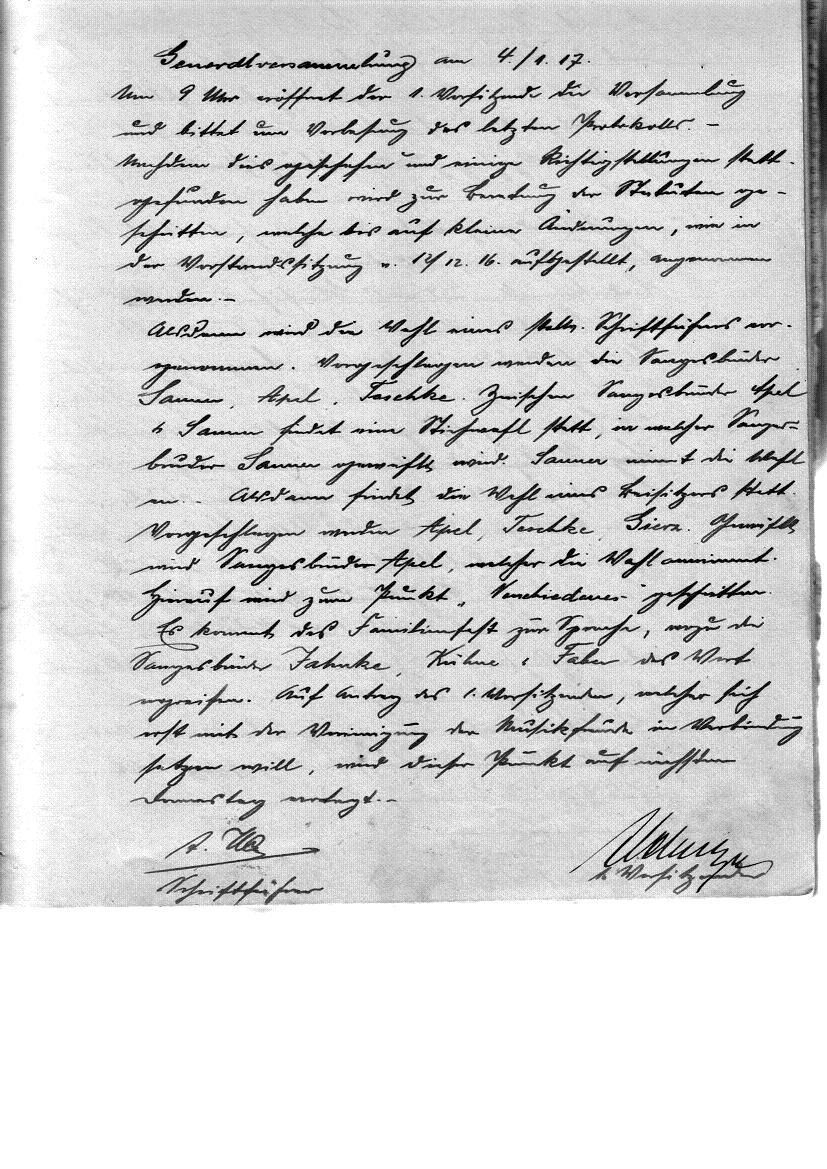
Ein Neuanfang wurde am 20-04-1916 gemacht, als in der an diesem Tag abgehaltenen Generalversammlung eine neue Vorstandswahl stattfand. Sangesbruder Herlyn wurde zum 1. Vorsitzenden gewählt und nun begann wieder eine rege Tätigkeit im Verein.
Am 16-07 wurde ein Konzert abgehalten, der Eintritt war auf 1.-Mark festgesetzt. Der Erfolg war glänzend. Auf 300 Mark belief sich die Einnahme und nun hatte der Kassierer etwas Bewegungsfreiheit und vor allem konnte das Dirigentengehalt für ein ½ Jahr gezahlt werden. In den nächsten Jahren erhielt Swakopmund viel Zustrom aus dem Inland. Diese Familien, deren Haupt durch die Verhältnisse zum Nichtstun gezwungen waren, lieferten manchen tüchtigen Sänger, so daß die aktive Zahl sich auf 42 erhöhte. Dieser Zuwachs kam in erster Linie aus der Beamtenschaft, sowie der Otavi Minen- und Eisenbahn-Gesellschaft. Mancher der arbeitslosen Familienväter waren Mitglieder der Sängerrunde Usakos und des Windhoeker Männergesangvereins gewesen.
Alle Veranstaltungen bedurften der Genehmigung des Magistrats und es erforderte Einsatz und Hingabe, um das Vereinsleben in Gang zu halten.
1917

1918
Das Jahr 1918 war ein Trauerjahr, nicht nur wegen der Kapitulation Deutschlands, sondern auch wegen einer Grippewelle, die auch in Swakopmund ihre Opfer forderte.
Dadurch wurde der Chor zu einer längeren Krankheitsperiode verurteilt. Zudem erteilte die Militärbehörde die Ausweisungsbescheide und so mancher Sangesbruder mußte Swakopmund verlassen.
Die wirtschaftliche Lage wurde trostlos und die Zahl der aktiven Sänger schrumpfte auf 12, so daß der Übungsbetrieb bis auf weiteres eingestellt wurde.

1920
Erst 1920 regte sich wieder zögernd neues Vereinsleben. Der Not gehorchend wurde dem Anschluß zum Deutschen Verein zugestimmt, falls alle Vereine dem Beitreten. Wir wurden nun die „Gesangs-Abteilung des Deutschen Vereins“.
Die vielfältigen Schwierigkeiten der Nachkriegszeit hatten starke Auswirkungen auf den Verein. U. a. ging der Chorleiter, Herr Ulrich, nach Deutschland zurück, der 1. Vorsitzende Winter hatte wenig Erfolge aufzuweisen und erst 1926 erlebte der Verein wieder ein
Aufwärtsentwicklung. So startete man mit neuer Begeisterung in das 25. Geburtsjahr.

1927
Am 15-06 1927 hatte der Windhoeker Männergesangverein in die Hauptstadt eingeladen und es wurde unter Beteiligung der Swakopmunder Delegation der Südwestafrikanische Sängerbund gegründet.
Das Stiftungsfest vom 17. bis 20. 11-1927 zum 25-jährigen Bestehen wurde in einem festlichen Rahmen gebührend gefeiert und die Gesangsdarbietungen wurden von 26 aktiven Sängern erbracht.

1928
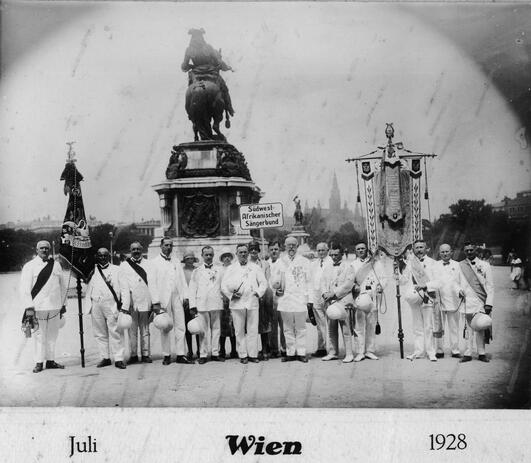
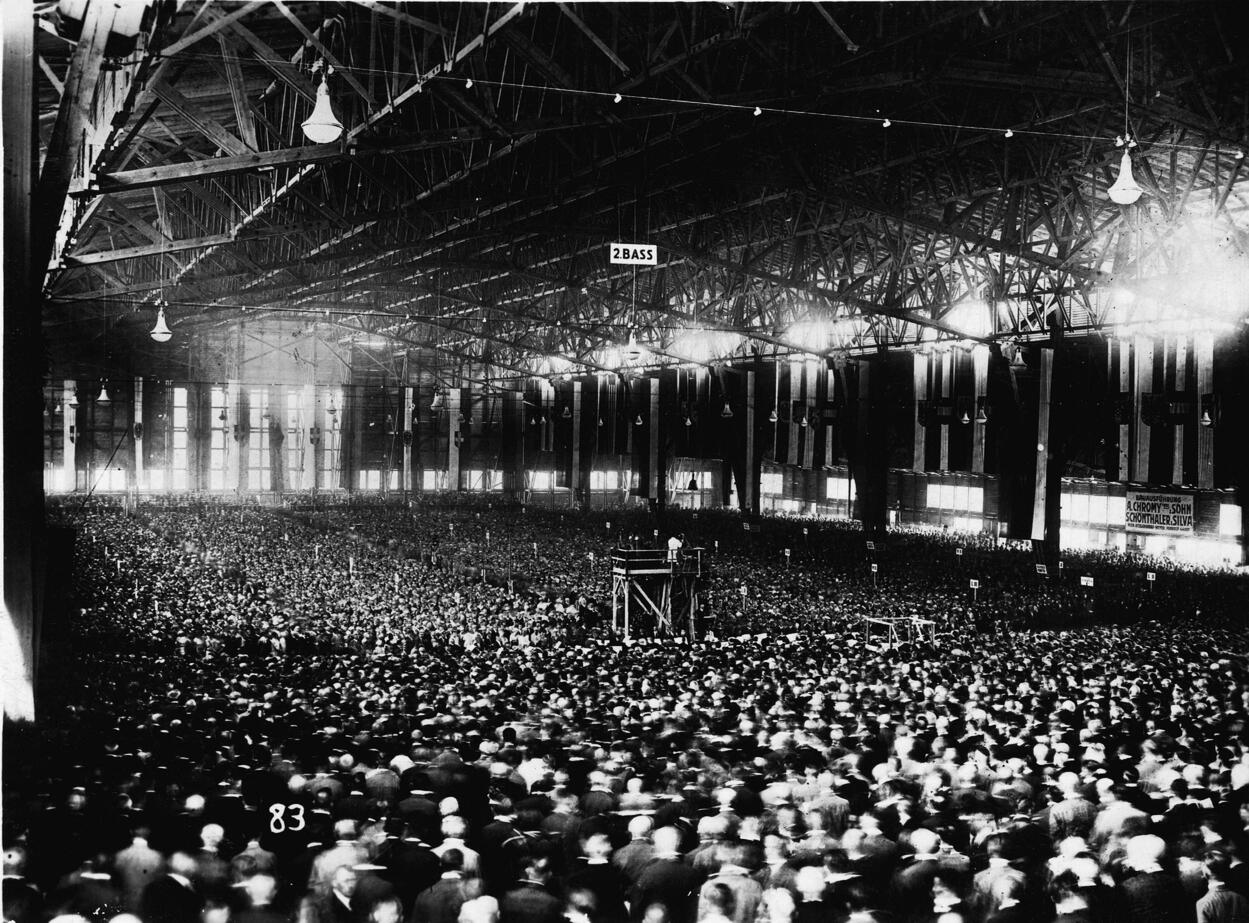
Im Mai des Jahres 1928 fand zu Ehren des „ größten Deutschen Sängers“ Franz Schubert eine große Kundgebung in Wien statt. Mit von der Partie waren auch unsere Sangesbrüder Eggert, Grützner, Prinsen und Prezbylski.
Zur Fahrt nach Wien traf man sich in Dresden mit der Abordnung des Männer-Gesangverein Windhuk unter der Leitung von Herrn Musikdirektor Müller. Die örtlichen Sangesbrüder hatten für freie Unterkunft und Bewirtung gesorgt und es war ein begeisternder Besuch in der Elbflorenz. Die schöne Umgebung Dresdens wurde besichtigt und überall herrschte Freude über den Besuch der Südwester Sänger. In einem Bericht heiß es: „ Bei der Einfahrt nach Pirna hielt eine unübersehbare Menschenmenge den Bahnhof umsäumt. Blumen wurden den Sängern und ihren Damen überreicht, und dann fand im Wartesaal die offizielle Begrüßung statt. Nach einem Willkommenstrunk setzte sich ein stattlicher Zug mit enthüllten Fahnen nach Copitz in Bewegung. Nach kurzer Rast traf man sich im „ Erbgericht „ zur Begrüßungsfeier und zum gemeinsamen Singen mit dem Chor „ Germania „ und den Copitzern Sängern…
Hier weitere Links zu Zeitungsberichten des Sängerbundfestes
aus der “Neue Freie Presse” von 1928:
Mehrere Seiten über den Festzug





1930-1932
Das erste Südwestafrikanische-Bundessängerfest fand vom 19 bis 21-04-1930 in Windhuk statt. Am Nachmittag und Abend wurden Konzerte gegeben im Hotel „ Großherzog“. Den Abschluß bildete ein Ausflug nach Farm Hoffnung am Montag, bevor man sich nachmittags am Reiterdenkmal sammelte und in einem Festzug zum Bahnhof marschierte. Zu diesem Zeitpunkt waren im Südwestafrikanischen Sängerbund 10 Vereine aus dem ganzen Land zusammengeschlossen mit 375 aktiven Mitgliedern.
Die kommenden Jahre 1931- 1933 brachten ein Auf und Ab und waren ein Spiegelbild der unsicheren wirtschaftlichen Situation.
Im Jahresbericht vom 25-01-1932 heißt es dazu: „ Wir stehen vor einer sehr dunklen und ereignisreichen Zukunft und deshalb muß es gerade jetzt unser Bestreben sein, durchzuhalten… „
Das 30-jährige Stiftungsfest fand am 03-02-1932 in üblicher Weise, aufgelockert durch ein kleines Theater- bzw. Singspiel, statt. Es wurde ein Eintrittspreis von sh 1.6 einschl. Steuer erhoben. Erwähnenswert ist noch ein Artikel aus der Swakopmunder Zeitung vom 08-10-1932 in dem wie folgt berichtet wird: „ .. die Hindenburgfeier … vollzog sich diesmal den Zeitläufen entsprechend in einem schlichteren, aber …würdigen Rahmen. Den Löwenanteil an den Darbietungen und der Festfolge hatte unser Männer-Gesangverein, und man darf mit besonderer Befriedigung feststellen, daß er in der Auswahl der Gesangstücke wie in ihrem Vortrag mustergültiges geleistet hat… „
Im Jahre 1932 vollzog sich auch ein Chorleiterwechsel, Herr Boß übergab den Dirigentenstab am 30-05 Herrn Lehrer Seidenstücker.


1933
Querelen mit dem Deutschen Verein wegen der Bezahlung einer Autofahrt nach Usakos überschatteten die Vorstandssitzungen und führten dazu, daß Sangesbruder Schulze 1933 den Vorsitz aufgab und Sangesbruder Wannemacher zum neuen Vorsitzenden gewählt wurde.
Am Sonntag, den 23-04-1933 gab es einen Volksliedervortrag des SMGV. Hierzu stand in einer Zeitungsnotiz: „ Der stattlichen Zahl der Zuhörer, die sich am Kriegerdenkmal eingefunden hatten, wurde ein wirklicher Genuß bereitet. Fünf Volkslieder, von denen man einige nur selten zu hören bekommt, wurden gesungen. : „ Im schönsten Wiesengrunde „, Es haben zwei Bümlein geblühet „, Es scheinen die Sternlein so hell „, Mir ist ein schön`s braun Mägdelein „ und „ Horch, was kommt von draußen rein“. Alle Lieder wurden mit Schwung und Schneid vorgetragen und bewiesen aufs neue die gute Schulung der Sänger. Hoffentlich veranlaßt der Erfolg dieser „ Matinee „ unter freiem Himmel den Männer-Gesangverein zur Wiederholung solcher dankenswerten Veranstaltungen.“
Ein an Aktivitäten reiches 1933, an dem sogar die Gründung eines gemischten Chores mit dem Kirchenchor diskutiert (aber abgelehnt wurde) wurde abgelöst von 1934, das unter der Mißstimmung durch starke Hochwasserschäden litt.
So wurde die Teilnahme am Sängerbundesfest abgesagt und statt dessen ein Ausflug nach Spitzkopje erwogen.
1935
Am 25-01-1935 fand wieder ein bunter Abend statt, an dem der SMGV durch gesangliches und schauspielerisches Können glänzte. Den Liedern „ Wo gen Himmel Eichen ragen „, „Auswanderer „, „ Ach, du klarblauer Himmel „ und „ Herzeleid“ schlossen sich die Schwänke „ Das fidele Gefängnis“ und „ Gewitzter Liebhaber“ an. Lebhafter Beifall einer erfreulich großen Besucherzahl bezeugte den Wert des Gebotenen.
Der „ Rheinische Abend“ am 20-06-1935 war ebenfalls ein großer Erfolg. Fabers Saal war in ein ganz besonders ansprechendes Festgewand gekleidet worden, und das Programm mit seiner vortrefflichen Auswahl schönster Rheinlieder und seiner Abwechslung von Männerchören erwies sich als ein außerordentlich glücklicher Griff. Die Soli des stimmgewaltigen Heldentenors, Sangesbruder Ohlmann und das Trompetengeschmetter des Sangesbruders Prinsen sind besonders hervorzuheben. Das komische Terzett der Sangesbrüder Lohmeier, Thelen und Feil, sowie die erste Vorführung eines Fernseh-Apparates durch Sangesbruder Wienberg als technisches Wunderwerk, wurden begeistert aufgenommen. In der Presse hieß es: „ ..wer nicht da war, hat viel versäumt! „
1937
Dann begann eine schwierige Zeit für den SMGV und mit der Jahresversammlung vom 25-03-1937 endet die Vereinschronik der ersten Zeit. Der zweite Weltkrieg brachte viel Trauer, Tod, Vertreibung und Elend auch für uns in Südwest und erst 1952 wagte man sich nach der erzwungenen 15-jährigen Suspendierung an einen Wiederanfang.

1952

Der 04-06-1952 kann als das Ende der Suspendierung des Vereins nach den Wirrnissen, die der zweite Weltkrieg mit sich brachte, bezeichnet werden.
Im Mai war Herr Schrader nach Swakopmund gekommen und erklärte sich bereit, als Dirigent tätig zu sein. Diese „ Wiedergeburt“ des Vereins war dem unermüdlichen Bestreben des Sangesbruders Wannemacher zu verdanken, der nichts unversucht ließ, die Voraussetzungen für eine gedeihliche Entwicklung des Vereins zu schaffen. Das Honorar des Dirigenten wurde auf L 1.- pro Abend festgelegt und die Übungsabende bis auf weiteres im Hotel Bismarck abgehalten.
Zur 60-Jahr Feier Swakopmunds, sprang für den erkrankten Dirigenten Herr Kirchenmusikdirektor Müller ein. Er hat es fertig gebracht, mit dem ihm fremden Chor den erforderlichen Kontakt herzustellen, damit die vorgesehenen Darbietungen vorgetragen werden konnten.
1953
Nach und nach konsolidierte sich der Verein wieder und 1953 fanden schon wieder Familienabende, Ausflüge und das Stiftungsfest am 13-11-1953 statt.
Das Jahr fand am 28-11 mit der Fahrt zum großen Baum am Swakoprivier seinen Abschluß, bei Feuertänzen und der Mitwirkung eines Orchesters. Bei dieser Gelegenheit wurde ad hoc beschlossen, jedes Jahr auf diese Weise am selben Ort das Jahr ausklingen zu lassen. Außer den planmäßigen Auftritten sorgte der Verein auch für Unterhaltung bei unvorhergesehenen Anlässen.
1955
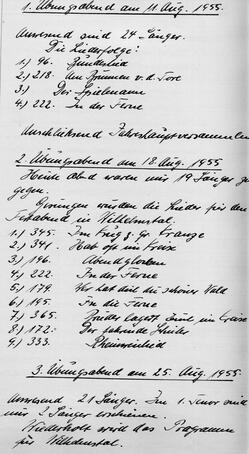
So wurde bei einem Schlachtfest am 06-05-1955, wozu alle Sänger mit ihren Frauen erschienen, bei Tanz und dem Vortrag einiger Lieder sowie einer rasch organisierten Tombola ein schöner Abend gestaltet.
Am 02-12-1955 feierte der SMG sein 53. Stiftungsfest. Hierzu heißt es in einer Pressemitteilung: „ ..Den Höhepunkt der gesanglichen Darbietungen bildete „ Der Spielmann „, und der anhaltende Beifall forderte eine Zugabe. Die Darbietungen des Männergesangvereins waren einwandfrei, und der neue Chorleiter, Herr Gustav Mehrens, der den Chor seit etwa zwei Monaten leitete bewies, daß er ihn in der Hand hat. Den heiteren Teil, der nun folgte, bestritt Herr Kerr und als aufsehenerregende Überraschung, geradezu als eine „ Unterhaltungskanone“ , erwies sich Herr Wilhelm Wittlich.


1956-1958

„…So nimmt es nicht Wunder, daß in der Jahresversammlung am 15-11-1956 Sangesbruder Wittlich den 1. Vorsitz von Sangesbruder Wannemacher übernahm“.
Jetzt folgte eine Zeit mit intensivem Vereinsleben und vielen öffentlichen Aktivitäten, bis 1958 ein neuer 1. Vorsitzender, Sangesbruder Luhde , gewählt wurde und Herr Schrader wieder als Dirigent gewonnen werden konnte.
1960-1970
Die 60er Jahre waren durch normalen Vereinsbetrieb gekennzeichnet.
Im Jahre 1963 übernahm Sangesbruder E. Schmidt den Vorsitz und steuerte den Verein durch ruhiges Fahrwasser.
Der Dirigent, Her J. Schrader, der zwischendurch nach Deutschland mußte, wurde vertreten durch Herrn Hatterschmidt, übernahm aber nach seiner Rückkehr wieder die Leitung der Singabende.
1965 wurde Sangesbruder E. Wenk zum ersten Vorsitzenden gewählt und die offiziellen Auftritte des Vereins hielten sich an bewährte Muster.
Chorfest in Windhoek, Gemeindefest der EV. Gem. im Jugendzentrum, Ständchen bei Geburtstagen und Hochzeiten der Sangesbrüder, Ausflüge ins Khanrivier, Gedenkfeiern und auch Singen bei Beerdigungen.
Als Vereinslokal schälte sich das Hotel „ Grüner Kranz“ heraus.
Der Vorsitz ging in jüngere Hände über, Sangesbruder S. Mater wurde 1967 dazu gewählt, aber die Zahl der Sänger stagnierte auf niedrigem Niveau, bei 15-20.
In dieser Zeit wurde erstmals der Gedanke geäußert, daß man sich künftig auch mit dem Singen von Liedern in anderen Sprachen als Deutsch befassen müßte.
Die Protokolle erschienen teilweise in Englisch und die Vorsitzenden wechselten mit Namen von Sangesbrüdern, die uns heute noch bekannt sind. D. Gudehuus, F. Rahn .
Als Chorleiter war Herr Gläfke vorübergehend tätig, aber das war offenbar nicht von Dauer. Er wurde seines Amtes entbunden und Herr Schrader übernahm zum wiederholten Male die Chorleitung.

1972
Das Stiftungsfest zum 70-jährigen Bestehen am 21-10-1972 im Haus der Jugend und der Ausklang tags darauf, am Sonntag im Stadtgarten mit Blasorchester und Gastchören aus Otjiwarongo, Grootfontein, Windhoek, Okahandja und WalvisBay waren dann wieder ein dem Verein entsprechendes würdiges Ereignis.
Dieser Erfolg beflügelte den Verein und mit dem Anstieg der Anzahl der Sänger stiegen auch wieder die Aktivitäten.
Im Dezember 1972 konnten die Sangesbrüder Ignatz Klimas und Herbert Haller mit der Goldenen Sängernadel und Otto Schnoor, Karl Wlodzka, Gerd Baas, Siegfried Mater und Hans-Dieter Mylo mit der Silbernen Sängernadel ausgezeichnet werden.
Die finanzielle Situation des Vereins besserte sich und man konnte an neue Notenmappen, Vereinsschrank ( für die Fahne ) und weitere Verbesserungen denken.


1973
Die Jahreshauptversammlung am 29-11-1973 ergab ein beredtes Bild vom Aufschwung unseres Vereins. Der 1. Vorsitzende, Sangesbruder Gudehuus sagte u. a. „… Besonderen Dank möchte ich unserem Dirigenten, Herrn Schrader, aussprechen und ebenfalls Frau Dörte Witte, seine Vertreterin, die während der 8-monatigen Abwesenheit von Herrn Schrader den Stab führte.
Durch die interessante Gestaltung der Singabende sind durchschnittlich zwischen 20 und 25 aktive Sänger pro Abend anwesend gewesen. Hierfür gebührt den aktiven Sängern Dank, da sie mit ihrem regelmäßigen Erscheinen dem Dirigenten die Möglichkeit gaben, mit Freuden voll und ganz zum Wohle unseres Gesangvereins zu arbeiten. .. Ganz besonders zu erwähnen ist, daß sich Frau Dörte Witte mit ihrem jugendlichen Schwung an für uns neue Musikliteratur herangewagt hat, die für den Chor einmal eine angenehme Abwechslung war.
Eine Kostprobe davon hatten wir Herrn Schrader bei seiner Rückkehr aus Deutschland am 18-11-1973 an Bord der „ Europa“ in Walvis Bay in Form eines Ständchens beim Empfang aus dem Seemannsliederheft „ Anker auf“ gesungen.
Der Vorsitz wechselte wieder einmal und Sangesbruder S Mater übernahm wieder die Vereinsleitung die im Jahr darauf Sangesbruder Wittlich übertragen wurde.
1974
Im November 1974 wurde von den Vereinigten Chören Swakopmunds Mozarts Requiem zum Vortrag gebracht.
1974 wurde Sangesbruder H. Kern zum 1. Vorsitzenden gewählt und es tauchten Überlegungen auf zur Teilnahme am Sängerfest in Berlin, was aber letztlich infolge der hohen Flugkosten nicht wahrgenommen werden konnte.
Die Anzahl der aktiven Sänger nahm wieder einmal stark ab und es ist bemerkenswert, daß trotzdem Vorstand und Chorleiter weitergemacht haben.

1977
Erst das Jahr 1977 brachte wieder einen Aufschwung. Das Jubiläumsjahr war angefüllt mit einer Vielzahl von Aktivitäten. Es begann mit einer Fernsehaufnahme für das ZDF durch Peter Scholl-Latour.
Zu Ehren des Komponisten Ludwig von Beethoven, der vor 150 Jahren gestorben war, fand am 06-05-1977 eine Gedächtnisfeier statt, die der SMGV ausgerichtet und mitgestaltet hat. In der Rede des 1. Vorsitzenden, Sangesbruder Dieter Gudehuus, heißt es: „ … Dem Männergesang haftet das Odium der Unvollkommenheit an, das geben wir gern zu, aber mit unserem Ziel und Zweck, auf volkstümliche Weise Musik mit jedermann und für jedermann zu pflegen, schließt Laienhaftigkeit, Unvollkommenheit und Begrenzung unserer Darbietungsliteratur ein.
Dann wurde geübt für die das Festkonzert des Südwestafrikanischen Sängerbund unter dem Motto „ Singen heißt Verstehen“ zu dessen 50-Jahr Feier am 18-06-1977, das in Windhoek stattfand. Im Programm sind neben den Chören aus Okahandja, Khomasdal, die Männerchöre aus Windhoek und Swakopmund aufgeführt.
Damals gehörten dem Südwestafrikanischen Sängerbund 13 Chöre an, davon sogar der Deutsche Männerchor Boland, Paarl.
Das Stiftungsfest zum 75-jährigen Bestehen unseres Vereins am 15-10-1977 stand unter der Devise „ Volkstümliches Musizieren „ Es wurde gestaltet von unserem Chor, Instrumentalmusik dem Gemischten Chor aus Swakopmund. Der Eintritt zu dieser Festveranstaltung war übrigens eintrittsfrei, was das Publikum mit sehr zahlreichem Erscheinen dankte.
Am 04-11 dieses ereignisreichen Jahres wurde bei einer internen Feier des SMGV Altsangesbruder Herbert Haller zum Ehrenmitglied auf Lebenszeit ernannt und der langjährige Dirigent (insgesamt mit Unterbrechungen 25 Jahre!), Herr Johannes Schrader verabschiedet.
Wie das nach einem turbulenten Jahr üblich ist, kam nun eine Periode des ruhigen Vereinsbetriebes.


1979
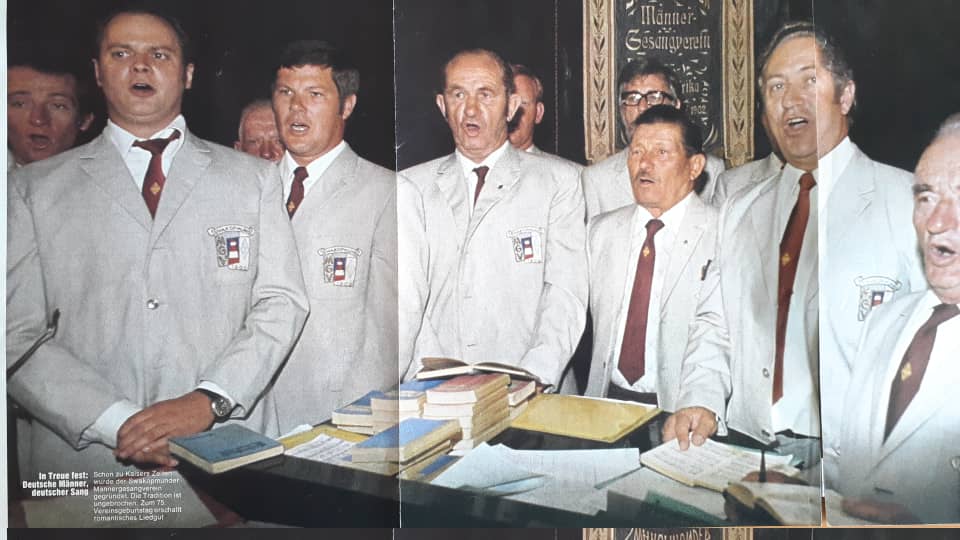
1979 veröffentlichte die Zeitschrift GEO einen Bericht unter dem Thema
Mit freundlicher Genehmigung GEO 
1982
Erst 1981 wurde mit der Vorbereitung des Jubiläums-Jahres 1982 wieder intensiv geprobt. Frau Dörte Witte war als Chorleiterin gewonnen worden und der erste Vorsitz wurde von Sangesbruder Herbert Schier ausgeübt.
Das 80-jährige Stiftungsfest fand am 05-11-1982 statt. Eine der besten Tanzkapellen in Südwest, die Wikaphoniker, wurden verpflichtet und es wurde ein zünftiges Fest. Sogar der Bürgermeister, Herr Jörg Henrichsen, ließ es sich nicht nehmen, an dem Fest aktiv mitzuwirken, indem er verkleidet als Bezirksamtmann von 1903 in Frack und Zylinder eine Lobrede in damaligem Amtsdeutsch auf unseren Verein hielt. In der AZ vom 18-10 1982 heißt es in einer Würdigung des Stiftungsfestes abschließend: „ … Heute, nach 80 Jahren bleibt das Volkslied trotz aller Um- und Abwege Kernstück der Arbeit an jedem Donnerstagabend.
Das beweist den Wunsch der Sänger, am Sonntagvormittag den 7 November um halb elf, unter der Leitung von Frau Dörte Witte, im Stadtpark den Bürgern einen bunten Strauß von Volksliedern zu überbringen. Bringen Sie Ihre Freunde mit.“
In diesem Jahr wurde versuchsweise erstmals das Lied „ Molly Marlone „ eingeübt sowie weitere Lieder aus verschiedenen Ländern.
1983
Leider war die Unterstützung von Seiten der Swakopmunder Gemeinschaft zum Stiftungsfest am 02-12- 1983 schwach, selbst Feriengäste waren kaum zu sehen. In diesem Jahr wurde für die Teilnahme an einem Rundfunkwettbewerb geprobt. Trotz großer Begeisterung des Chores ( anfänglich ) und Mühe des inzwischen eingesetzten Chorleiters, Herr Engelbrecht, unter Mitwirkung von Frau Witte, wurde die Aufnahme im Haus der Jugend durch Disziplinlosigkeit einiger Sangesbrüder eine große Blamage.
Der Chorleiter stellte wegen dem unregelmäßigen Erscheinen der Sangesbrüder, deren Unpünktlichkeit sowie der nicht Anerkennung seiner Bemühungen sein Amt zur Verfügung.
Sangesbruder Genis sprang in die Bresche, aber die Suche nach einem neuen Chorleiter war damit nicht gelöst.
1985
Am 21-02-1985 fand dann die erste Probe mit dem Musiklehrer, Herr Werner Kühlwetter, statt, der nach Swakopmund gezogen war. Damit begann eine fruchtbare, 15 Jahre dauernde Dirigentschaft.
Höhepunkt des Jahres war ein musikalischer Frühschoppen am 04-08-1985. Bei diesem Anlaß erhielt Sangesbruder Herbert Haller eine Ehrenurkunde für seine 60-jährige Mitgliedschaft im SMGV. Der stellvertretende Bürgermeister Herr Goetje, verlas die Grußbotschaft der Stadt. Außerdem gab es ein gespendetes Schlachtessen.
Am 05-10-1985 lud die Kantorei zu einem Chorfest ein, an dem alle Chöre aus Swakopmund und Walvis Bay teilnehmen konnten. Der SMGV trug zwei neue Lieder „Kumbaja my Lord“ und „Vive la Compagnie“ vor. Besonderer Dank wurde im März Herrn Dr. Gerhard Gellrich, Kapellmeister aus Unkel ( Deutschland ) ausgesprochen, der nach authentischen Quellen das als Südwesterlied bekannt gewordene Lied „ Hart wie Kameldornholz …“ überarbeitet und dem SMGV gewidmet hatte.
Die Anzahl der aktiven Sänger hatte sich wieder erhöht und unter dem neuen Vorsitzenden, Sangesbruder H. Hofmeister, wandte man sich neuen Aufgaben zu.
So wurden über neue Jacken diskutiert, die jedoch ähnlich sein sollten, wie die alten und es gab Besprechungen mit und über den Südwestafrikanischen Sängerbund. In einem Gespräch mit dem derzeitigen Vorsitzenden des SWASB, Herrn K. Harbeck, wurde überlegt, einen neuen Anlauf für diese Vereinigung zu machen und im April einen Sängertag in Swakopmund zu veranstalten. Aber mangels Teilnahme anderer Chöre fand dieser Sängertag nicht statt und der SWAB sollte bald sein Bestehen aufgeben.
1986
Zum Stiftungsfest am 31-10-1986 im Grünen Kranz hatte der SMGV einen Liederabend vorbereitet mit einer bunten Palette sehr bekannter und weniger bekannter Deutscher Volkslieder. Dieser Abend erhielt eine Bereicherung durch eine Tombola, der Drehorgel von Sangesbruder „Fips“ Seyer und der Disco von Sangesbruder Arvid Grosche und war ein voller Erfolg.

1987
Auch das „ Padfahren“ wurde nicht vergessen, wenn es auch nur ein Ausflug zur Spitzkopje wurde.
In den Jahren 1987/1988 wurde erstmals der Gedanke geäußert, eine Kassette mit Südwester Liedern zu machen.
Der SMGV nahm verschiedene Gelegenheiten wahr, um sein Können der Öffentlichkeit vorzutragen, so wurde zur 80-Jahrfeier des Maltahöhe Hotels, zur Begrüßung der „ Roten Funken“ aus Köln im Europa Hof zum Farmertag in Kaltenhausen, zum Winzerfest beim SKW in Windhoek und zur 50-Jahrfeier der Gerberei in Swakopmund gesungen.
Der Besuch des Schubert-Chores aus Rastatt am 18-10-1987 fand in der Swakopmunder Bevölkerung keine große Resonanz.
Ein besonderes Ereignis war die Fahrt des SMGV auf die Farm zu Werner Gossow bei Donkerhoek. An diesem Wochenende wurde viel gesungen und der „ Bokkie am Spieß“ schmeckte vorzüglich!
1989
1989 wird Sangesbruder Moisel zum 1. Vorsitzenden gewählt und Frau Dörte Witte erklärt sich bereit, bis zur Rückkehr von Werner Kühlwetter, der nach Deutschland mußte, die Chorleitung zu übernehmen.
Es zeigte sich eine gewisse Unruhe unter den Sängern und es wurde sehr viel diskutiert. Unzufriedenheit herrschte besonders darüber, daß langjährige, erfahrene Sangesbrüder sehr unregelmäßig zu den Proben kamen.
Trotzdem ging der Singbetrieb weiter und der SMGV verfügte über ein Repertoire von ca. 30 Liedern, diese wurden bei verschiedensten Anlässen gesungen, wie beim Brückenfest am Vatertag, den 04-05-1989, am Krankenbett und Grab des langjährigen Ehrenmitgliedes Herbert Haller, beim Liederabend der Kantorei, bei der Geburt des Sprößlings unserer Vertretungsdirigentin Dörte und beim Stiftungsfest.
Auch die Beteiligung am Karnevalsumzug muß erwähnt werden.
1990
Der Ausflug zur Blutkoppe eröffnete die Aktivitäten diese Jahres, dann kam die erfolgreiche Vatertagsfeier bei unserem Sangesbruder „ Shorty“ Lohmeier, bei dem nach alter Tradition dem kühlen Naß kräftig zugeprostet wurde, aber Höhepunkt des Jahres 1990 war die Nordenfahrt.
Am 15-06-1990 ging es zunächst nach Otavi, wo der SMGV das Schülerheimfest gesanglich bereicherte, dann über die Besichtigung des Meteor nach Rietfontein zu einem geselligen Abend und anschließend nach Tsumeb, wo bei einem Frühschoppen im Minenhotel das Ende der Fahrt eingeläutet werden mußte.
Hervorzuheben unter den Veranstaltungen dieses Jahres ist noch eine Feierstunde aus Anlaß der Wiedervereinigung Deutschlands am 03-10-1990.
1991
Der SMGV unternahm vom 07 bis 09-06-1991 eine „ Schnitzeltour“ nach Hochfeld und Witvlei. Es war eine sehr fröhliche Tour, die vielen heute noch aktiven Sängern in Erinnerung ist. Auf dieser Fahrt wurden die Kontakte zu den dortigen Farmern gepflegt bzw. gefestigt und auch für den Verein geworben. Abschließend heißt es im Fahrtbericht : „ …Der verspätete Frühschoppen … war sicher von den Auftritten der Tour der schwungvollste. Selbst Smittie konnte sich nicht verkneifen, einige Fotos von uns für den Advertiser zu schießen. Die Krönung der Fahrt aber war sicher das dritte Schnitzel, das uns aufgetischt wurde. Es war aber mit Abstand das beste. Nach zwei mächtigen Bierrunden, die uns der Wirt spendierte, ..nach 1300 km Fahrt zum „ Südpol „ Namibias kehrten wir nach Swakopmund zurück „.
Über die Jahreshauptversammlung am 28-11-1991 wurde in der Presse berichtet.
In diesem Jahr war der Mehlemer Quartetverein von 1908 zu Gast und die Veranstaltung Mitte Februar war ein voller Erfolg.
Unser langjähriger Dirigent, Johannes Schrader kam zu Besuch nach Swakopmund und diesem Ereignis wurde große Aufmerksamkeit gewidmet.
Ein elektronisches Klavier wurde angeschafft und damit waren wir in der Lage, vertraut und mobil die musikalische Basis der Proben überall hin mitzunehmen.
1992
Vom 30-04 bis zum 04-05-1992 wurde eine Nordenfahrt nach Omaruru – Grootfontein – Tsumeb und Otjiwarongo unternommen.
Das bedeutendste Ereignis war aber das 90. Stiftungsfest am 06-11-1992 im Haus der Jugend unter dem Motto „ Berlin bleibt Berlin „. Die Suche nach einem geeigneteren Vereinslokal wurde intensiviert, nachdem der Saal im „ Grüner Kranz „ immer weniger die Anforderungen eines Gesangvereins erfüllte.




1993
Im Jahr 1993 wurde als Probenraum das Pfadfinderheim gewählt.
Highlight in diesem Jahr war die Fahrt nach Lüderitzbucht vom 20 bis 23-05-1993. Mit 4 Fahrzeugen fuhren 18 Sangesbrüder in den Südwesten Namibias und die 2000km wurden ohne größere Probleme bewältigt. Der Dankesbrief von Herr Schuster ( Hermine Offen Heim ) zeugt von dem musikalischen Erfolg dieser anstrengenden, weiten Reise.
Erstmals wird eine Tonbandaufnahme von „Südwester Lieder“ angesprochen.
Der Vorsitz wechselt von Sangesbruder Moisel an Sangesbruder Rohlwink.
Der Männerchor Windhoek hatte sich aufgelöst und nun wurden auf Wunsch ehemaliger Chormitglieder die noch erhaltenen Objekte, wie Fahne, Notenschränke, Noten, Dirigentenpult u. dergl. im Turmzimmer des Pfadfinderheims vom SMGV gelagert. Auch der Nachlaß des SWA Sängerbundes wurde nach Swakopmund gebracht und hier vom SMGV aufbewahrt.
1995
Am 13-01-1995 hat der SMGV ein Stiftungsfest veranstaltet unter dem Motto „ Auf Kreuzfahrt im Mittelmeer „. Dabei wurden Musikstücke und Lieder aus den Mittelmeerländern Spanien, Italien, Griechenland Ägypten und Israel vorgetragen. Darüber hinaus gab es noch Beiträge aus Libyen, Syrien und vom Schwarzen Meer. Sogar die gereichten Speisen waren dem Thema angepaßt. Dieses abwechslungsreiche Programm fand viel Anklang und der gelungene Abend fand seinen Ausklang mit Tanz und Gesang nach den von der Kapelle Andy-Combo unseres Sangesbruders Andy Bauer dargebrachten, zündenden Melodien.
Vom 18-03 bis zum 21-03 fand zum wiederholten Male eine Nordenfahrt statt über Twyfelfontein, Khorixas, Farm Bambatsi, Outjo, Farm Ngubamis, Okaukuejo, Otjiwarongo und Omaruru. Überall wurde auf Campingplätzen übernachtet.
Am 25-05-1995 wurde der Vatertag auf der Brücke gefeiert und danach rüstete man sich zum nächsten Stiftungsfest, das am 17-11-1995 unter dem Motto „ Wein, Weib und Gesang „ stand. Auf dem Programm standen Lieder, wie „ Rosen aus dem Süden „„ Wien, Wien, nur Du allein „ , „ Julischka „ usw.

1996
Vom 02-04 bis zum 04-04-1996 besuchte der Husumer Shanty-Chor Swakopmund. Dieser Abend hat den Kontakt zu dem Gastchor so geknüpft, daß ein Gegenbesuch des SMGV in Rede stand.
Für die Zeit vom 28-04 bis zum 05-05-1996 wurde die lange vorher angedachte Weintour nach Kapstadt Wirklichkeit. In diesem Jahr wurde auf Beschluß der Versuch gemacht mit einem Nachrichtenblatt des SMGV die interne und externe Aufmerksamkeit zu steigern und evtl. auf diesem Wege auch neue Mitglieder zu werben. Als Titel wurde ” Die Seeschwalbe ” gewählt. Je nach Bedarf, in unregelmäßigen Abständen wird nun über Ereignisse und Aktivitäten des Vereins berichtet.


1999
Vom 20-03 bis zum 22-03-1999 haben wir auf der Farm Ameib ein Übungswochenende abgehalten, um ungestört in der wunderschönen Natur am Fuße der Erongoberge unsere Lieder für die CD, die schon lange in Planung war, zu einer aufnahmefähigen Qualität zu bringen. Das Singen in der Felsenhöhle von Bullsport war ein Genuß und wir sind im Bewußtsein uns perfekt vorbereitet zu haben wieder nach Swakopmund zurückgekehrt.
Die Aufnahmen erfolgten dann mit Bordmitteln im Pfadfinderheim, wo wir unsere Singproben abhielten, aber das Ergebnis war enttäuschend. Vieles, was wir in langen Proben erarbeitet hatten, war unbrauchbar, so daß im Jahre 2000 ein neuer Versuch anstand.
Bei den relevanten Swakopmunder Ereignissen, wie Brückenfest, Karneval und Oktoberfest (mit den Hergolshäusern Musikanten) haben wir mitgewirkt und am 27-08-1999 hatten wir unser Stiftungsfest, das gemeinsam mit einem Akkordeonorchester aus Baden-Württemberg und dem Südtiroler Chor „ Seis am Schlern“ gestaltet wurde.
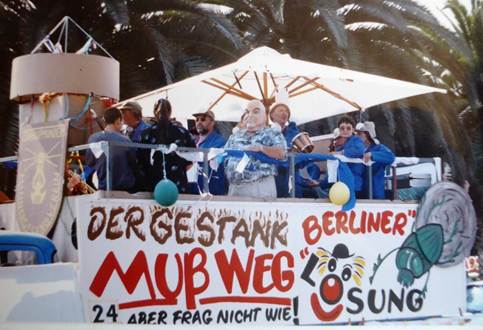
Wir haben auch am Straßenumzug des Swakopmunder Karneval teilgenommen:
2000
Auch im vergangenen Jahr fand die Jahreshauptversammlung ohne den 1.Vorsitzenden statt, der damals schon schwer krank war. Walter Schmid ist dann Anfang dieses Jahres seiner Krankheit erlegen. Ihm, und auch unseres fördernden Mitglieds, Manfred Nickel, zu Ehren, bitte ich Euch jetzt zu erheben, um ihnen einige Augenblicke des Gedenkens zu gewähren.
Vielen Dank ! Ein weiterer trauriger Anlaß der diesjährigen Vereinsgeschichte war der Ausschluß eines Mitglieds aus dem Verein. Aufgrund von Behauptungen in einem Schreiben an den Vorstand, die von diesem als vereinsschädigend empfunden wurden, hat Siegfried Mater seine Mitgliedschaft verloren. Dies wurde auf einer außerordentlichen Mitgliedsversammlung des ganzen Vereins bestätigt. Das Protokoll dieser Versammlung liegt heute hier zur Einsicht aus.
Jedoch nun zu den erfreulicheren Aktionen :
1. Das Molenfest fand als Stiftungsfest unter Beteiligung des Beckendorfer Schifferknotens im großen Bierzelt an der Mole statt. Rundum war es ein Erfolg, der bestimmt wiederholungsbedürftig ist. Dafür möchte ich mich bei allen Beteiligten, aber insbesondere bei Herbert Schier als Initiator bedanken.
2. Oktoberfest : Trotzdem es einige Anlaufschwierigkeiten gab, denke ich sagen zu können, daß auch das diesjährige Fest, selbst ohne auswärtige Kapelle, dem Aufwärtstrend der vergangenen 3 Jahre gefolgt ist. Wir haben wieder etliches daraus gelernt und in Zukunft wird es weiterhin Verbesserungen geben.
3. Ausflug zum Brandberg. Obwohl nur unter kleiner Beteiligung, war dies für alle Beteilgten eine sehr runde Sache. Besonders die Anwesenheit einiger Frauen wurde positiv erwähnt.
4. Wie in der Vergangenheit haben wir uns wieder am Karneval beteiligt. Eine kleine Gruppe sang „Oh Donna Clara“ beim Büttenabend und es wurde ein Umzugswagen zum Thema „Ja-hunderte vergehn“ auf die Räder gestellt.
5. Weiterhin traten wir zu etlichen anderen Anlässen auf :
– Als erstes zu unserer kleinen Weinachtsfeier im Strandhotel.
– Beim 70. Geburtstag von Werner Kühlwetter, bei dem er zu unserem
Ehrenmitglied ernannt wurde.
– Zu Walter Schmids Trauerfeier in der Evangelischen Kirche.
– Anläßlich der Jukskeiweltmeisterschaften zusammen mit einigen anderen
Küstenchören in der Namib Grundschule.
– Im Lagerschuppen des Walfischbuchter Hafen zusammen mit den Sängern
des deutschen Flottenverbandes „Emden“
– Zu Jupp und Bärbel Petsch Hochzeit.
– Auf dem Forschungsschiff Meteor im Walfischbuchter Hafen – eine
interessante und denkwürdige Gelegenheit
– Zum Heldengedenktag am 12.11.2000.
Positives ist auch über unsere Finanzen zu berichten. Mit einigen weiteren größeren Veranstaltungen sollten wir für unsere Deutschlandreise ein kleines Polster zusammenhaben. Holger Ahrens gebührt für die Finanzverwaltung Dank.
Auch unsere Seeschwalbe, die in zwangloser Folge erscheint, bleibt eine Bereicherung unseres Vereins. Dem Redaktionsteam unter Fritz fähiger Leitung herzlichen Dank. Vorschläge, wer noch eine Kopie davon bekommen sollte, nimmt Fritz Wagner gern entgegen.
Trotz zweier Anläufe ist unsere Aufnahme der Südwester Volkslieder leider noch immer nicht zufriedenstellend abgeschlossen. Es bleibt zu hoffen, daß es uns im kommenden Jahr gelingt.
Der Verein hat zur Zeit 27 aktive und 5 fördernde Mitglieder.
1.Tenor : Holger Ahrens, Paul Forster, Ulf Göthje, Edmund Klimas, Harald Knobloch, Herbert Schier.
2.Tenor : Heinz Heuschneider, Herbert Lohmeier, Gotthardt Rethemeyer, Jochen Schwietering, Hans Thomas, Wolfgang von Seydlitz
1.Bass : Andreas Bauer, Hans Fritze, Arvid Grosche, Robert Hornung, Franz Irlich, Rüdiger Moisel, Fritz Wagner.
2.Bass : Peter Brüggemann, Wolfram Fraude, Franz Klimas, Fred Müller, Kurt Müseler, Hans Roxin, Hajo Schumacher, Gerd Walter.
Leider haben uns 5 Sänger im Laufe des Jahres aus verschiedenen Gründen verlassen : Sigi Mater, Deon Pagel, Jupp Petsch, Werner Scholze, Gerd Schwietering. Dagegen freue ich mich, Robert Hornung und Fred Müller als neue Sänger in unseren Reihen begrüßen zu können.
Ich danke hiermit allen Sangesbrüdern für das mir entgegengebrachte Vertrauen. Auch für den geleisteten Einsatz Eurerseits im vergangenen Jahr möchte ich Euch meinen Dank aussprechen. Dieser gilt ganz besonders allen Vorstandsmitgliedern und dort im Besonderen all den voll im Beruf Stehenden.
Zuletzt, aber deshalb bestimmt nicht im Geringsten, gilt mein Dank unserem Ehrenmitglied und Dirigenten, der sich auch in diesem Jahr, wie in so vielen davor, vorbildlich für unseren Verein eingesetzt hat. Lieber Werner, ich glaube, erst die Zukunft wird die Tragweite Deines Wirkens auf allen Ebenen hier bei uns im Verein deutlich machen.
Als Ausdruck dieses Dankes und auch als Anerkennung für viele Jahre selbslosen Einsatz für die Musik, den Gesang und uns hier im Männergesangverein im Besonderen, ernennt Dich der Vorstand und der Verein heute zum Ehrendirigenten des Swakopmunder Männergesangvereins.
Ich danke Euch.
Rüdiger Moisel
Vorsitzender
2001
Am 24-03-2001 ist der SMGV in die Kristallkellerei nach Omaruru gebeten worden, um den rechten Rahmen für das Weinfest zu geben. Die erste Weinkönigin unseres Landes wurde an dem Abend von Bachus gekrönt und es wurde ein fröhliches Fest, das bis in den frühen Morgen dauerte. Die Proben für die CD wurden im März beendet und nun wurde die Herstellung veranlaßt. Dafür wurde ein Studio und eine Produktionsfirma in Deutschland vorgesehen. Das diesjährige Stiftungsfest wurde als „ Amerikanischer Abend“ gestaltet und darüber sogar in der Zeitschrift des Deutschen Sängerbundes „ Chor und Lied“ berichtet. Das zur festen Veranstaltung im Jahreslauf gehörende Okoberfest fand diesmal mit der Blaskapelle „ Die Eschenbachtaler“ am 13-10-2001 statt und wurde vor vollbesetztem Zelt – etwa 1100 Besucher waren erschienen – ein voller Erfolg. Den Abschluß bildete, wie mittlerweile schon üblich ein tags darauf gemachter nachmittäglicher Ausflug ins Rivier des Swakop mit abendlichen Braai mit den Akteuren aus Franken.

2002
Jahresbericht des 1.Vorsitzenden des SMGV von 1902 für das Jahr 2002
Liebe Dirigentin, Wilna Liebenberg, lieber Ehrendirigent Werner Kühlwetter, liebe Sangesbrüder! Herzlich willkommen zur Jahreshauptversammlung im 100. Jahr unseres Bestehens.
Bitte erlaubt mir, diesen Bericht etwas umfassender zu gestalten, als ich es sonst tun würde, weil mit dem heutigen Abend eines der bedeutendsten Jahre in der Vereinsgeschichte offiziell zu Ende ist.
Selbst auf die Gefahr hin, daß es vielleicht langweilt, möchte ich etwas an den Anfang stellen, das einen Teil meiner Festrede am 24.10.2002 ausmachte, zur Erinnerung an Werte, die uns im Verein bis jetzt immer wichtig erschienen :
Brüder reicht die Hand zum Bunde! Diese schöne Feierstunde führ uns hin zu lichten Höhn! Laßt, was irdisch ist entfliehen! Unsrer Freundschaft Harmonien dauern ewig fest und schön!
Fährst Du in die Namib raus – bring die Empties mit nach Haus!
Wenn doch das Meer aus Wein nur wär, und das Gebirge wär aus Schinken…. Boote sollten Kelche sein, daraus die Sänger dann trinken.
Unsre Mole und der Strand sind wohlbekannt, auch die Brücke und der warme Dünensand. Wo man singt und kegelt, ja, tagein tagaus – da ist meine Heimat da bin ich zu Haus.
Und saßen wir am Feuer, des nachts wohl vor dem Zelt, lag wie in stiller Feier um uns die nächtge Welt.
Ich wünsche mir, daß dies alles in Zukunft weiterhin einen Teil des Fundaments ausmacht, worauf unser Verein fußt. Dann bin ich überzeugt, daß wir auch in den kommenden Jahren wieder auf solch ereignis- und erfolgreiche Zeiten wie 2002 zurückblicken dürfen.
- Zu den „großen“ Ereignissen des Jahres zählte natürlich die Deutschlandreise des Vereins über die anderweitig schon berichtet wurde. In Kürze einige Impressionen: Vielfältig und anstrengend, großartige Gastfreundschaft bei allen Chören unterwegs und erfolgreiche Auftritte überall (der sächsische „Wochenkurier“ : „Eine beeindruckende Vielfalt mit völkerverbindender Wirkung.“ „Rhein-Sieg-Kreis“: „Jubelnder Beifall für den MGV aus Swakopmund“). Als Tourorganisator Fritz Wagner an dieser Stelle nochmals ein besonderer Dank. Auch die Reisebroschüre unter Herbert Schiers Redaktion hat zum Erfolg dieser Tour beigetragen.
- DAS Highlight des Jahres waren sicher unsere Festtage im Oktober, bestehend aus dem Festkonzert, dem Chorkonzert und dem Stiftungsfest „In 80 Minuten um die Welt“. Obwohl das Programm gemessen an unserem Können recht anspruchsvoll war (wir sangen immerhin 37 Titel an den drei Tagen!), meisterte der Chor die musikalischen sowie die organisatorischen Aufgaben souverän und bewies einmal mehr, was wirklich in ihm steckt. Dies wurde auch durch das überwältigende Echo in der Swakopmunder Gemeinschaft und der Presse bestätigt. Eine besondere Form der positiven Kritik wurde uns durch den NBC zuteil. Thomas Dauser vom SWF stellte eine 50-minütige Rundfunkreportage zusammen, die die Festtage und das Wirken des Vereins in einem sehr guten Licht erscheinen ließ.
- Swakoptoberfest: Obwohl es wieder kleinere Schwierigkeiten gab, denke ich sagen zu können, daß auch das diesjährige Fest im SFC, zusammen mit den Dürnbacher Musikanten und deren Tanzgruppe, sowie Andys Combo recht erfolgreich war. Selbst die Tatsache, daß es nur 2 Wochen vor den Festtagen stattfand, verhinderte nicht, daß 800-900 Besucher kamen. Wir haben weiter daraus gelernt und in Zukunft wird es sicher noch Verbesserungen geben.
- Vom 10-11.8.Ausflug nach Nordenburg. Rüdiger hatte zum 50. geladen. Eine erfreulich große Anzahl der Sangesbrüder war der Einladung gefolgt und es war für alle Beteilgten eine runde Sache. Auch die Anwesenheit vieler Frauen und einiger Gäste sei erwähnt.
- Wir traten natürlich auch zu vielen anderen Anlässen auf:
– Nach Weihnachten in der Woermann Brock Arcade zu einem Platzkonzert
– am 7. Januar zusammen mit der Unterdarchinger Blasmusik im Innenhof des Woermannhauses
– Im Februar hielten wir einen erfolgreichen Kneipenbummel ab.
– Beim 75. Geburtstag von Gerd Schwietering am 7.5.
– Vor der Deutschlandreise am 19.5. gab es zum Fischessen der Pfadfinder ein Abschiedsingen im Pfadfinderheim.
– Die Nachbetrachtung der Deutschlandreise am 21.7. erlaubte auch den Daheimgebliebenen Einblicke in die schönen Erlebnisse.
– Das Singen im Lions Altersheim am 20.8. sorgte für Freude unter den Oldies.
– Der Auftritt zum 100. Bestehen des Marie Douglas / Prinzessin Ruprecht Heims auf Einladung von Sangesbruder, Fred Müller
– Besuch und Konzert der Wupperhofer und anschließendes Braai bei
Arvids Eck in der Wüste 11.-12.9. Bei 200 Teilnehmern war es nicht nur ein echter Cateringerfolg. Dafür dem gesamten Verein ein Megadankeschön – es war einfach toll, als Vorsitzender zu erleben, wie sich jedes einzelne Mitglied eingesetzt hat!
– Die Beteiligung am Gottesdienst in der Evangelischen Kirche 22.9. fand großen Anklang.
– Im November halfen wir die würdige Trauerfeier Hanne Schiersmitzugestalten.
– Arvids 50. Geburtstag dagegen war eine sehr lustige Angelegenheit.
– Dem Heldengedenktag am 10.11.2000 konnten wir zusammen mit dem Streichquintett und „Die Himmel rühmen“ einen feierlichen Rahmen geben.
Weiterhin wichtige Ereignisse des Jahres sind die Herausgabe unserer CDs, die kurz vor der Deutschlandreise endlich fertig waren. Weitere 500 Exemplare in einer überarbeiteten Form sind nun auch fertig geworden.
Die Festschrift anläßlich unseres Jubiläums hat viel Lob geerntet. Allen, die sich daran beteiligt haben, mein besonderer Dank. Es liegt nun an uns, die Restbestände sobald wie möglich zu verkaufen, damit wir auch finanziell von der Arbeit profitieren, die da hineingesteckt wurde.
Im Jubiläumsjahr haben wir uns eine schicke Weste mit afrikanischen Motiven, die weiten Anklang fand, sowie ein Poloshirt mit dem Vereinswappen, geleistet. Ich glaube, damit und mit unserer flexiblen Sängertracht mit grauer und schwarzer Hose, sind wir für die meisten Gelegenheiten gut gerüstet.
Es sind 2002 wieder 3 neue Seeschwalben erschienen, die unser Tun und Lassen auch über Stadt– und Landesgrenzen hin bekannt machen. Auszüge aus der Seeschwalbe erschienen selbst in der Monatsschrift des Deutschen Sängerbundes „Lied und Chor“.
Die Vereinsfahne ist für N$ 22500 restauriert worden. Dafür sind noch jede Menge Sponsoren vonnöten. Wir haben uns auch anläßlich des Jubiläums Anstecknadeln und Sticker machen lassen, wovon noch ausreichend zum Verkauf vorhanden sind.
Trotz großer Ausgaben im laufenden Jahr, hat sich unsere finanzielle Position nicht wesentlich verschlechtert. Holger Ahrens wird uns gleich mehr darüber berichten.
Der Verein hat zur Zeit 33 aktive und 15 fördernde Mitglieder.
1.Tenor: Holger Ahrens, Paul Forster, Rolf Förtsch, Ulf Göthje, Edmund Klimas, Harald Knobloch, Herbert Schier.
2.Tenor: Heinz Czech, Dieter Gudehus, Heinz Heuschneider, Herbert Lohmeier, Gotthardt Rethemeyer, Jochen Schwietering, Hans Thomass, Wolfgang von Seydlitz
1.Bass: Andreas Bauer, Hans Fritze, Arvid Grosche, Thorsten Herrmann, Werner Kühlwetter, Rüdiger Moisel, Werner Scholze, Fritz Wagner.
2.Bass: Peter Brüggemann, Wolfram Fraude, Dieter Friedrich, Franz Klimas, Fred Müller, Kurt Müseler, Franz Oberprieler, Hans Roxin, Hajo Schumacher, Gerd Walter.
Leider hat uns Robert Hornung im Laufe des Jahres verlassen müssen. Dagegen freue ich mich, die folgenden neuen (alten) Sänger (wieder) in unseren Reihen begrüßen zu dürfen. Rolf Förtsch, Heinz Czech, Dieter Gudehus, Thorsten Herrmann, Werner Scholze und Dieter Friedrich. Gleichzeitig möchte ich mich bei Gerd Meyer, Deon van Vuuren, Tobias Loemke, Robert Bauch und Rodney Sakeus bedanken, die uns mit ihren Stimmen im Laufe des Jahres ausgeholfen haben, und hoffe, daß einige von ihnen vielleicht doch den Weg in den Verein gefunden haben und im nächsten Jahr voll mitmachen können.
Liebe Sangesbrüder! Ich weiß, es war für viele von Euch ein anstrengendes Jahr. Ich möchte aber behaupten, wenn Ihr in einigen Jahren zurückblickt, werdet Ihr Euch fast nur noch der positiven Aspekte unseres Jubiläums erinnern – Kameradschaft, große Einsatzbereitschaft aller Sänger, echte musikalische Höhepunkte, tolle Erlebnisse, die Festschrift, die CDs, usw.
Wir haben viel geschafft. Dies ist ohne großen Einsatz nicht möglich gewesen. Mein Dank gilt deshalb in erster Linie jedem Einzelnen von Euch, und, ohne die Leistung irgendeines Sängers zu schmälern, erlaubt mir, einige Namen stellvertretend für alle zu nennen. Ich denke hier an Thorsten Herrmann und Werner Scholze, die von weit her aus Walfischbucht und Usakos zu den Proben kommen mußten. Ich denke an Eddi Klimas der sich mit seiner Tochter Edith viele Stunden mit den Noten auseinandergesetzt hat, die dann wieder leichtfertig durcheinandergebracht werden. Franz Klimas der sich unermüdlich um Reklamen der Festschrift, die Photoaustellung des Jubiläums bemüht hat. Werner Kühlwetter, der immer einspringt, wenn Not an der Frau ist, ein Lied musikalisch untermalt, und auch ein Bericht und eine Rede nachgebessert werden muß. Peter Brüggemann der mit steter Hilfsbereitschaft, Festschrift, Plakate und Eintrittskarten Computer- und Termingerecht zu allen Tages- und Nachtzeiten zustandegebracht hat. Hans Fritze der im Pfadfinderheim bei unseren Proben der letzte Mann sein muß, wenn die „Bittereinders“, wie ich, nicht nach Hause finden.
Auch möchte ich nicht vergessen, wie sich unsere Frauen für unsere Sache einsetzen. Ihnen allen vielen Dank! Stellvertretend seien Teresa Grosche als Deputy Finanzministerin, Anneliese Pack als Küchenchefin und Ruth Schumacher als Ersatzschriftwartin erwähnt.
Amper laaste, maar definitief nie in die minste nie, beste Wilna Liebenberg, n groot dank aan jou. Vir jou insette, vir jou geduld, jou taaigheid om aan te gaan as jy eintlik al wou gaan slaap, jou optimisme terwyl ons stemme seker partykeer verskriklik geklink het, jou aanvaardiging van by tye penetrante idees vanuit die koor. Dit word van ons almal meer waardeer as wat dit partykeer blyk. Maar, ek dink, ook jy sal saamstem, dat daar baie goeie terugvoerding vanuit die gemeenskap was, hoe die koor positief opgetree het. Ek dink tot n baie groot mate te danke aan jou. Dus hoop ek, dat jy vorentoe nog altyd kaans sien om met ons nuwe uitdagings te aanvaar. Baie Dankie
Liebe Sangesbrüder, ganz besonders möchte ich mich heute bei meinem Vorstand bedanken. Dieses Jahr war hart für uns alle – und die meisten stehen so ganz nebenbei auch noch voll in einem Beruf! 5 Reiseplanungstreffen, 6 Swakoptoberfestausschußsitzungen, 7 Jubiläumsplanungssitzungen, 20 Vorstandssitzungen (selten kürzer als 3 Stunden), und noch viele andere Treffen und stunden- und tagelange Arbeiten waren in diesem Jahr nötig, daß alles richtig klappte. Gerhard Walter, der sich immer bestens um die Quartierverteilung unserer vielen Besucher kümmert, Herbert Lohmeier, Oberkartenverkäufer, CD-Manager und mehr, Arvid Grosche, unser Booze-Manager und Ersatzschriftwart, Fritz Wagner, Archivar, Schriftwart, Redakteur der Festschrift und der Seeschwalbe, Holger Ahrens, Minister of Finance (Jahresumsatz fast N$ 150 000 !) und dann Herbert Schier, Ideenlieferant, manchmal linke, manchmal rechte Hand, Feuerwehrmann, wenns brennt und vieles mehr. Ohne Euch alle, hätten wir die diesjährigen Erfolge nicht erzielen können. Im Namen des Vereins und besonders auch im Namen zukünftiger Sängergenerationen möchte ich Euch ein großes Lob aussprechen.
Ich danke Euch.
Rüdiger Moisel
2003
Jahresbericht des 1.Vorsitzenden des SMGV von 1902 für das Jahr 2003
Liebe Wilna Liebenberg, lieber Ehrendirigent Werner Kühlwetter, liebe Sangesbrüder, liebe Gäste !
Herzlich willkommen zur Jahreshauptversammlung im 101. Jahr unseres Bestehens, die ja aus bekanntlichen Gründen in den Januar 2004 verlegt wurde.
Obwohl wir eigentlich im vergangen Jahr etwas ruhiger treten wollten, bin ich mir nicht so sicher, ob uns das auch wirklich gelungen ist, wie man an Hand der Auflistung der Veranstaltungen vielleicht erkennen kann.
1. Die Gästeabende als Teil neuer Mitgliedswerbung zum Jahresanfang waren nicht ganz ohne Erfolg. Man sollte sich überlegen, ob dies nicht in gewissem Stil und Rahmen eine jährliche Veranstaltung werden könnte.
2. Beim 10-jährgen Jubiläum der Altpfadfindergilde haben wir mit unserem Auftritt sicher zum Gelingen dieser Veranstaltung beigetragen.
3. Die Lüderitztour im Mai knüpfte an eine gute Tradition des Vereins an, das eigene Land zu bereisen und dabei unser eigenes Liedgut auch in Landesteilen vorzutragen, die sonst nicht immer von einer Vielfalt kultureller Veranstaltungen verwöhnt worden sind. Dazu kam auch, dass etliches auf dem Programm der Fahrt für viele Beteiligte ziemliches Neuland war, wie z.B. die Farm Tiras, der Gästekomplex Rostock Ritz, die Felszeichnung eines Segelbootes in den Tirasbergen, die „weisse Wand“ an der Küste Lüderitzbuchts – aber auch das „köstliche Nahrungsmittelangebot“ des Nesthotels neben der verlassenen Waterfront.
4. Es folgten weniger aufwändige Einsätze des Vereins wie beim Hans-Albers-Abend und zum Vatertag auf der Kleinsiedlung Palmenhorst am Swakoprivier bei Gommi Witte.
5. Mit dem Windhoeker Männerchor unter Lydia Dedekind durften wir einen – beim Publikum gut angekommenen – Operettenabend mitgestalten. Man merkte deutlich, dass diese Art der Musik hier in Swakopmund immer wieder ein dankbares Publikum findet.
6. Eine kleine, aber schlagkräftige Abordnung des Vereins trat am deutschen Büttenabend des Küska auf und nahm als verirrte Schutztruppler die Umbenennung der Swakopmunder Strassennamen unter dem Narrenthema „und das ist gut so!“ – frei nach dem Berliner Bürgermeister Wowereit – ein wenig aufs Korn. Ebenso brachte ein kleines Quartett der Kantorei zu deren 50. Jubiläum ein Ständchen, in dem die Kantorei-Dirigenten der vergangenen Jahre ein wenig auf die Schippe genommen wurden.
7. Sicher war das Swakoptoberfest im vergangen Jahr auf verschiedenen Ebenen nicht so erfolgreich wie in den Jahren zuvor, aber das sollte vielleicht einfach wieder neuer Anreiz sein, es in Zukunft besser zu machen.
8. Dahingegen zählte das Stiftungsfest mit dem Motto „101.Nacht“ (unter Mitwirkung des Jugenblasorchesters Gymnasium Paulinum aus Münster) zu den Erfolgstories des Jahres. Alleine das Bild der Sänger, als Araber die Bühne betretend, war es wert, den Abend zu besuchen. Die Resonanz in der Swakopmunder Gesellschaft war dann auch dementsprechend positiv.
9. Weitere Aktionen des Vereins waren die Mitgestaltung des Jubiläumsgeburtstags Frank Drobischs bei Arvids Eck, die musikalische Untermalung des Heldengedenktags im November sowie das Gruppenphoto des Vereins an der Mole anlässlich des 100. Jubiläums unserer Vereinsfahne.
10. Das Jahr fand mit dem Weihnachtssingen im Haus der Jugend und einem anschliessenden gemütlichem Beisammensein im Kückis Pub seinen Abschluss. Mir wurde übrigens berichtet, dass die Jungs des Vereins an diesem Abend „Virgin Marys Baby“ recht erfolgreich geschaukelt hätten.
Weiter ist zu berichten, dass wir nun ständigen Aushang für die Vereinsaktivitäten in einem Schaukasten am Ankerplatz und auf einem Anschlagbrett in der Swakopmunder Buchhandlung haben. Es wäre zu begrüssen, wenn sich die einzelnen Mitglieder weitere Gedanken zur Gestaltung dieser Aushänge machen würden.
Das Archiv in der Mansarde bei Klimas Glas wächst Dank Fritz Wagners Einsatz stetig. Mit den von Michael Rohloff gespendeten Auslageregalen kann das Material übersichtlicher dargestellt werden. Es lohnt sich einfach einmal dort zu stöbern.
Es sind 2003 wieder 2 neue Seeschwalben erschienen, die über unser Tun und Lassen berichten. Vielleicht sollte sie etwas regelmässiger erscheinen – dazu wäre eine zusätzliche Hilfe in der Gestaltung für Fritz Wagner bestimmt eine grosse Unterstützung.
Der Verein hat heute Zeit 36 aktive und etwa 15 fördernde Mitglieder.
1.Tenor: Holger Ahrens, Ingo Berg, Paul Forster, Rolf Förtsch, Ulf Göthje, Edmund Klimas, Harald Knobloch, Herbert Schier.
2.Tenor: Heinz Czech, Dieter Gudehus, Heinz Heuschneider, Gotthardt Rethemeyer, Jochen Schwietering, Hans Thomass, Wolfgang von Seydlitz
1.Bass: Andreas Bauer, Hans Fritze, Arvid Grosche, Thorsten Herrmann, Werner Kühlwetter, Rüdiger Moisel, Herrmann Raulfs, Werner Scholze, Fritz Wagner.
2.Bass: Peter Brüggemann, Dieter Friedrich, Franz Klimas, Fred Müller, Kurt Müseler, Gerd Link, Falco Moisel, Oliver Boehmker, Franz Oberprieler, Hans Roxin, Hajo Schumacher, Gerd Walter.
Ich freue mich über die folgenden neuen Sänger in unseren Reihen: Herrmann Raulfs, Ingo Berg, Gerd Link, Oliver Boehmker und Falco Moisel. Besonders erfreulich ist, dass wieder einmal ein paar jüngere Sänger den Weg zu uns gefunden haben. Sie haben dafür gesorgt, dass das Durschnittsalter des Vereins drastisch gesunken ist!
Herbert Lohmeier und Wolfram Fraude haben sich eine „Auszeit“ genommen. Wir hoffen, dass sie in diesem Jahr wieder zu uns stossen werden. Auch waren zeitweise die Gäste Georg Erb und Christian Traupe dabei. Vielleicht wird es ja in diesem Jahr etwas Langfristigeres.
Ich möchte mich wiederum bei Gerd Meyer, Christiane Ast und ganz besonders Patrick Heinlein bedanken, die unseren Chor mit ihren Stimmen, Instrumenten und sonstigem sehr geschätzten Einsatz am Stiftungsfest und auch sonst unterstützt haben.
Liebe Sangesbrüder! Im vergangenen Jahr haben wir wieder Einiges geschafft. Dies ist ohne großen Aufwand einfach nicht möglich. Mein Dank gilt allen, die sich immer wieder für den Verein einsetzen. Exemplarisch dafür möchte ich diesmal Wolfgang von Seydlitz und Paul Forster als wirklich treue Sangesbrüder erwähnen. Natürlich möchte ich nicht vergessen, unsere Sängerbräute, die auch in diesem Jahr hinter den Kulissen bei vielem wieder sehr aktiv waren, in diesen Dank einzuschliessen, wobei ich diesmal als Beispiel dafür, die Leistung Karin Förtschs in Vertretung unseres Schriftwarts Fritz Wagner würdigen möchte.
Beste Wilna Liebenberg, weereens ook n groot DANKIE aan jou. Vir jou geduld, jou taaigheid om aan te gaan al lyk dit partykeer as of niemand lus is om te sing nie. Vir jou nonchalans om n sangles deur te trek, terwyl daar skermutselinge tydens n kooroefening tussen sangers aan die gang was. Maar ek dink ook – veral as n mens die algemene opinie en Jan Publiek mag glo – jy is besig om die Swakopmunder Männergesangverein se sangkultuur op jou manier te verjong. Baie dankie!
Dem Vorstand vielen Dank. Liebe Sangesbrüder, wenn man während des Singens vor sich hindöst, zu spät zur Probe gekleckert kommt, bei Gemeinschaftsaktivitäten nur mit Mühe die inneren Bremsbeläge löst, sollte einfach mal dran gedacht werden, was andere, z.B. der Vorstand, an Arbeit, Mühe und Aufwand mobilisieren um den Verein aktiv und attraktiv zu erhalten. Als Mitglied braucht man dann „nur“ enthusiastisch mitzumachen!
Dies soll nun auch die Einleitung zu meinen Schlussworten sein: Nach 21 Jahren in verschiedenen Rollen SMGV kann ich aus beruflichen und persönlichen Gründen dem Vorstand nicht mehr wie in der Vergangenheit zur Verfügung stehen. Ich werde natürlich weiterhin aus vollster Brust mitsingen und auch den Verein weiterhin bei Gelegenheit organisatorisch unterstützen, wenn es mir möglich ist. Ich bitte um Verständns für meine Entlastung und gleichzeitig um ebenso gute Unterstützung für den neuen Vorstand, wie sie mir zu Teil wurde. Ich hoffe, die neue Truppe orientiert sich auch ein wenig daran, dass der Verein nun mehr jüngere Mitglieder hat.
In dem Sinn und mit den Worten Herrmann Hesses : „Wenn die ganz jungen Leute mit der Überlegenheit ihrer Kraft und ihrer Ahnungslosigkeit hinter uns her lachen und unseren beschwerlichen Gang, unsre paar weissen Haare und unsre sehnigen Hälse komisch finden, dann erinnern wir uns daran, wie wir einst, im Besitz der gleichen Kraft und Ahnungslosigkeit, ebenfalls gelächelt haben, und kommen uns nicht unterlegen und besiegt vor, sondern freuen uns darüber, dass wir dieser Lebensstufe entwachsen und ein wenig klüger und duldsamer geworden sind“, wünsche ich dem neuen Vorstand alles Gute.
Ich danke Euch.
Rüdiger Moisel
2011
24.11.2011
JAHRESBERICHT des SMGV 02 vom 1.Vorsitzenden für das Jahr 2011
Liebe Dörte, Ehrenmitglied und Dirigentin, liebe Linette, liebe Sangesbrüder, liebe Gäste!
Herzlich willkommen zur Jahreshauptversammlung im 109. Jahr unseres Bestehens.
Ich denke, wir dürfen auf ein Programm mit viel Erfolg, aber auch auf Höhen und Tiefen zurückblicken.
Das Jahr fing für den Verein auf einer sehr traurigen Note an.
Unser langjähriges Mitglied und unser Ehrendirigent, Werner Kühlwetter, verstarb nach kurzer Krankheit in Windhoek. Werner war seit 1985 im SMGV aktiv und man kann sicher sagen, dass er den Verein im vergangenen Vierteljahrhundert wie kaum ein anderer geprägt hat. Seine musikalischen Fähigkeiten und sein Intellekt haben dem Verein immer wieder geholfen, aus seinen Veranstaltungen etwas Besonderes zu machen. Noch wenige Wochen vor seinem Tod hat er beim Stiftungsfest als Begleitung am Klavier seinen Einsatz erbracht. Ein Grossteil des deutschsprachigen Liedguts, das heute im Verein präsent ist, geht auf seine Initiative zurück. Aber auch seine persönliche Art, sein Streben nach gesellschaftlicher Harmonie und sein Wesen in geselliger Runde mit seiner geliebten „Quetsche“ lassen ihn als ECHTEN SANGESBRUDER unvergessen bleiben.

Weniger prägend, aber trotzdem ein GUTER Sangesbruder, war Wolfgang von Seydlitz, der uns auch verlassen musste. Still, immer freundlich, zuverlässig und absolut stimmfest erwachte er nur manchmal am Lagerfeuer mit seinem Schifferklavier aus seinem ruhigen Dasein. Diesen beiden, in ihrer jeweiligen Art so unterschiedlichen, wirklich vorbildlichen Sangesbrüdern, möchte ich nun ein kurzes Gedenken gewähren. Ich bitte euch dazu aufzustehen.
Unser Jahresablauf hatte viele verschiedene Momente und ich nenne diese nun in lockerer Folge.
Das Weihnachtssingen im Dezember im Haus der Jugend trug wie alljährlich dazu bei, sich auf die Weihnachtszeit einzustimmen.
Die Hamburger Abende im Januar mit unserem Jung von der Kapstädter Waterkant waren sicher zumindest von der wirtschaftlichen Seite recht erfolgreich. Aber auch den Zuhörern hat es doch gefallen was geboten wurde. Ein Dank allen, die sich um diese Jahreszeit eingesetzt und mitgeholfen haben, besonders Herbert als Initiator und Gerd Link als Auktionator
Der offizielle Jahresanfang fiel mit Fritz Wagners 80. Geburtstag zusammen, den wir diesmal in der Trommel begingen. Auf besonderen Wunsch Fritzs, sangen wir ein wunderschönes deutsches Volkslied, das uns seitdem sehr ans Herz gewachsen ist und uns das ganze Jahr schon begleitet hat : Der Wanderer
Zusammen mit dem Windhoeker Männerchor gestalteten wir im März einen musikalischen Abend in Omaruru auf dem Grundstück der Privatschule und Heims. Im Rahmen der Gegebenheiten, war es sicher ein kleiner Erfolg. Aber bei einer nächsten Gelegenheit darf man sicher nach einem besseren Ambiente Ausschau halten und vom Organisator erhoffen, dass er bessere Reklame macht.
Dank einiger aktiver Sangesbrüder unter Franz Klimas enthusiastischer Leitung, kam ein Umzugswagen für den Karneval zu stande. Viele Dank euch allen, die mitgewirkt haben.Es wäre erfreulicher gewesen, wenn wesentlich mehr Sänger den Wagen zum Umzug besetzt hätten !
Unsere Darbietungen bei Swakop Musiziert unter der Schirmherrschaft der Kunstvereinigung hatte – trotz relativ einfacher Linien – sehr guten Anklang.
Im Laufe des Jahres traten wir in lockerer Runde bei den verschiedensten Gelegenheiten auf um mit unseren Liedern eine Freude zu bereiten : Neben Fritz Wagners 80. Im Januar, wurden die Jubilare Harald Knobloch (70), Franz Klimas (70), Linette Potgieter(50) und Christian Stiebahl (30) bedacht. Auch ein Ständchen zu Rüdigers Klassentreffen anlässlich des 40. Matrikjubiläums wurden von einem harten Kern besungen, die damit gleich einen erklecklichen Betrag für die Deutschlandreise verdienten. Auch die Neueinweihung des Prinzessin Rupprecht Heims wurde nicht vergessen.
Das Stiftungsfest Nummer 109: “Mit Suedwestern auf Pad – WIR sind nicht hummeldumm” unter Mitwirkung des Windhoeker Männerchor darf als guter Erfolg gelten, der sich nahtlos in eine Serie ähnlicher Veranstaltungen der vergangenen Jahre einreiht. Allen Dank!

Ein einschneidendes Geschehen für den Verein war der Wechsel in eine neue Uebungsstätte. Nach langer Vorbereitung fand dieser Umzug dann Anfang September statt. Mit dem Swakopmund Club erhoffen wir uns für die Zukunft ein Lokal wo wir uns musikalisch und gesellschaftlich wohlfühlen werden, wo wir ein Mitspracherecht durch unsere Mitgliedschaft im Club haben, und das uns ein wirkliches HEIM wird.
Natürlich stand dieses Jahr auch im Zeichen der Jubiläumstour nach Deutschland im Mai 2012. So zum Beispiel war das jetzige Programm so ausgerichtet, dass es weitgehends schon die Lieder für diese Tour beinhaltet. Es wurden spezielle Uebungswochenenden veranstaltet, die viele Sangesbrueder als besonders hilfreich empfanden und die auch Dörte als positiv erfuhr.
Der Verein hat 29 aktive und etwa 12 fördernde Mitglieder.
1.Tenor: Holger Ahrens, Willie Davel, Jens Dettmold, Ulf Göthje, Edmund Klimas, Harald Knobloch, Herbert Schier.
2.Tenor: Heinz Czech, Uli Harms, Karl-Ernst Otto, Bernd Schlag, Hans Thomass, Wuedo van Wijk
1.Bass: Andreas Bauer, Raini Becker, Arvid Grosche, Thorsten Herrmann, Jochen Schwietering, (Fritz Wagner) (Helmar Runge).
2.Bass: Peter Brüggemann, Rolf Förtsch, Hagen Klein, Franz Klimas, Gerd Link, (Siegfried Mater), Rüdiger Moisel, Herbert Schulz, Christian Stiebahl
Joel Nambuli singt seit September als Gast im 1. Tenor.
Abschliessend danke, allen Sangesbruedern fuer ihren Einzatz – im Kleinen und Grossen – und wenn es sich nur um den pünktlichen und regelmässigen Probenbesuch gedreht hat.
Dank meinem Vorstand, der mich wirklich vorbildlich – trotz mancher Panne und nicht immer angenehmen Situationen – mitgetragen hat…. Erlaubt mir hier zwei Mitgliedern des Vorstandes einen besonderen Dank auszusprechen – sozusagen stellvertretend für alle und ohne den Einsatz irgendeines anderen Mitglieds zu schmälern : Unser aktiver Rentner Franz Klimas. Er ist ein absolutes Vorbild fuer alt und jung. Als Kassenwart zuverlässig, fleissig und als Sänger treu und immer das Wohl des Vereins und seiner Sangesbrüder im Sinn. Dann Peter Brüggemann, der voll im Beruf steht und sicher von da her oft unter erhöhter Belastung funktionieren muss. Er hat – als ko-optierter Schriftwart seinen Mann gestanden und oft in Nachtarbeit, viel Schreibkram für den Vorstand erledigt. Ich weiss genau, wieviel Zeit hier investiert wurde. VIELEN DANK
Zuletzt aber nicht zumindest, unserem Team in der “musikalischen Direktion” Dörte und Linette. Vielen Dank. Ich weiss, es muss manchmal sehr frustrierend sein, vor halben Mannschaften zu stehen und das GLEICHE immer wieder zu wiederholen. Aber ich denke doch, dass wir auf eine produktive gemeinsame Zeit zurückblicken koennen, und das ist nicht zuletzt euch beiden zu danken.
Abschliessend haette ich für mich SELBER nun auch noch eine Art Dankeswunsch an euch alle – für die Zukunft….nach einem Jahr, in dem es sicher mehr als in manchen anderen Jahren, Dissonanzen oder Kontroversen gab, möchte ich mir als Vorsitzender – dem dieser Verein sehr am Herzen liegt – von euch ALLEN wünschen – da wir nun mal ein Gesangverein sind – und der nicht zuletzt DAVON sehr viel braucht, die HARMONIE in den Vordergrund stellen. Die Harmonie in der Musik und im Miteinander, sollten wir uns von Niemandem nehmen lassen. Sie ist einfach viel zu viel Wert. Wie wichtig ist es da im Vergleich, ob wir ein englisches oder Damaralied mehr und ein deutsches weniger singen. Wie wichtig ist es da, dass wir nicht alle die gleiche Sprache sprechen, wie wichtig ist es da, wenn unsere Haut unterschiedliche Mengen Melanin enthält, wie wichtig ist es da, wo wir letztendlich proben, oder unser gemeinsames Bier trinken ?
HARMONIE ist mir um ein Vielfaches wichtiger! Ich wünsche mir, dass sie nicht “nur” unsere Musik bestimmt, sondern unser gesamtes Vereinsleben.
Ich danke euch.
Rüdiger Moisel
Vorsitzender
2012
JAHRESBERICHT des SMGV 02 vom 1.Vorsitzenden für das Jahr 2012
Liebe Dörte, Ehrenmitglied und Dirigentin, liebe Linette, liebe Sangesbrüder, liebe Gäste !
Herzlich willkommen zur Jahreshauptversammlung im 110. Jahr unseres Bestehens.
Ich freue mich, dass ihr so zahlreich hier erschienen seid, was ich als Zeichen dafür werte, wie wichtig euch dieser Verein ist.
Wir blicken auf ein Jahr zurück, in dem das herausragende Ereignis die Jubiläumstour 2012 war. Wir dürfen sicher mit Stolz behaupten, dass diese Deutschlandreise ein grosser Erfolg war. Die Mitreisenden hatten viele neue und schöne Eindrücke und Erlebnisse. Unseren Gastgebern und Zuhörern haben unsere Auftritte fast immer sehr gut gefallen. Wir dürfen sicher von uns behaupten, würdige Vertreter und Botschafter Namibias gewesen zu sein. Zwei Aspekte dieser JT2012 haben mich persönlich besonders erfreut.
Die Kameradschaft und Toleranz, die sich zwischen den Mitreisenden gefestigt hat und die wir sicher bis zu einem gewissen Grad in den Verein zurückgetragen haben und es hoffentlich auch weiter tun werden.
Die Tatsache, dass der Verein durch verschiedene Massnahmen, es auch weniger finanzstarken Mitgliedern ermöglicht hat, an dieser Reise teilzuhaben. Unterm Strich war eine 2-wöchige Deutschlandreise für weniger als N$ 12 000 – Flug inklusive – schon ein Schnäppchen…..
Eine sehr positive Folge der JT2012 war dann natürlich der Entschluss Dörte Wittes, sich weiterhin als unsere Dirigentin zu verpflichten. Allerdings hat sie sehr deutliche Bedingungen gestellt und ich wünsche dem Verein im Sinne weiterer fruchtbarer Zusammenarbeit, dass diese eingehalten werden. Jeder EINZELNE sollte sich dessen zu allerzeit bewusst sein und dann auch wirklich dementsprechend handeln.
Durch die grosse Tour war natürlich das Programm für den Rest des Jahres stark beeinträchtigt.
Hier nun die wenigen Schwerpunkte, die der Verein setzen konnte.
Musikalisch wurde das Jahr durch zwei Weihnachtskonzerte eingerahmt : im Dezember 2011 und im November 2012, wobei wir gestern sicher das anspruchsvollere Programm besser dargeboten haben als im Vorjahr.
Zur Weihnachtszeit 2011 gehörte auch ein feines Jahresabschlussessen im Hansa Hotel, dem Franz und Doris eine besondere Note verliehen hatten.
Wie in vergangenen Jahren durften wir dem Forschungsschiff, der Merian, wieder einen Besuch abstatten und eine ganz kleine Truppe traf sich anlässlich der Walpurgisnacht am 30.4. auf Nordenburg. Von dort ging es fast sofort und direkt Richtung Deutschland.
Neben Geburtstagsständchen und -besuchen für Kurt Müseler (88), Hans Thomas (80), Jens Detmold (40) und Joel Nambuli (21) hatten wir einen Auftritt mit Aldo Berens im Boutique Hotel, der bei den Zuhörern guten Anklang fand.
Dann liessen wir es uns nicht nehmen unser Programm der JT2012 in unser Hinterland “auf die Bäume” zu schaffen. Mit dem Dämmerschoppen im Baumhaus (Tree House) in Usakos konnten wir ein paar wenigen Gästen eine Freude bereiten.
Im August kam allerdings noch ein Auftritt dazu, bei dem wir uns vor kreischenden Fans und unendlichen Zuschauermassen fast nicht retten konnten. Leicht vom Winde verweht erklangen unsere Stimmen im weiten Rund des Swakopmunder Sportstadions. 120 Jahre Swakopmund nannten unsere Stadtväter und – Mütter diese etwas desolate Veranstaltung.
Dagegen trafen wir beim Gemeindefest der evangelischen Kirche ein wirklich dankbares Publikum an und konnten gemeinsam mit den Hammanix Sängern für ausreichend gute Stimmung sorgen.
Unser diesjähriges Stiftungsfest, betitelt “Mach mal Urlaub” nach dem bekannten Schlager, reihte sich nahtlos in ähnliche Erfolge der Vergangenheit ein. Besonders der Wechsel des Bühnenbildes von einer anfangs steifen Männerchorszene, über einen lustigen Strandaufenthalt (bei dem sich die meisten Sangesbrüder grösste Mühe gegeben hatten, ausgefallene Kleidung anzuziehen – inclusive eines “Strips” auf der Bühne -) bis hin zur lockeren Sangesprobe in der kleinen Kneipe in unserer Strasse – bei der tatsächlich mal FEHLER erlaubt waren – fanden bei allen Zuschauern besten Anklang.
Mit dem Besuch der Freunde des Shantygesangs Unterrhein als letzte Veranstaltung des Jahres haben wir Neuland betreten. Als Anbieter des Wüstenbraais wollten wir den uns den Aufwand der häufig nicht geladenen “Gäste” ein wenig besser vergüten lassen. Vielleicht kann das ein Model für die Zukunft sein.
Der Verein zählt heute (27) aktive Sänger (manche mehr, manche weniger). Die “Wandervögel” habe ich in Klammern gesetzt, was aber keine Aussagekraft über ihren Einsatz für den Verein oder ihre Begeisterung beim Singen hat.
1.Tenor : Holger Ahrens, Willie Davel, Jens Dettmold, Ulf Göthje, Edmund Klimas, Harald Knobloch, Joel Nambuli, Herbert Schier, (Bernd Schlag), Wüdo van Wijk.
2.Tenor : Heinz Czech, Uli Harms, Karl-Ernst Otto, Hans Thomass,
1.Bass : Andreas Bauer, Raini Becker, Arvid Grosche, Helmar Runge, Jochen Schwietering, (Fritz Wagner).
2.Bass : Peter Brüggemann, Franz Klimas, (Gerd Link), Siegfried Mater, Rüdiger Moisel, (Herbert Schulz), Christian Stiebahl
Der Verein hat 11 fördernde Mitglieder.
Horst Gantz, Dieter Gudehus, Herbert Lohmeier, Hans Lorenz, Norbert Olbrich, Herrmann Raulfs, Luise Schmid, Giessbert Sornig, Lothar Wiedmann, Gisela Wittlich, Konrad Woermann
Wenn man sich die jährliche Bestandaufnahme der aktiven Sangesbrüder ansieht, gedenkt man fast unwillkürlich all derer die nicht mehr unter uns weilen. Auch im vergangenen Jahr haben wir uns von 4 ehemaligen Sängern verabschieden müssen. Rolf Förtsch, Hans Fritze, Klaus Hornung, Hajo Schumacher. Wir gedenken euch in Stille in dem wir uns nun kurz erheben.
Ich danke euch !
Dank möchte ich abschliessend auch allen aussprechen, die sich für unseren Verein einsetzen. Den stillen Helfern im Hintergrund…. die gar nicht mal zum Verein gehören…… allen Mitgliedern – bei den Proben, bei den Auftritten und anderen Veranstaltungen – den Vorständlern – bei den Meetings und all den organisatorischen Aufgaben, die nun mal meistens an einigen Wenigen hängenbleiben und fast immer nach besten Möglichkeiten erledigt werden, und natürlich – LAST BUT NOT LEAST unserem musikalischen Zweigespann : Dörte und Linette
Rüdiger Moisel
1.Vorsitzender
2014
JAHRESBERICHT DES VORSITZENDEN ZUR JHV AM 27.11.2014
Das neue Jahr 2014 fing mit dem inzwischen zur Tradition gewordenen ‘Strandbraai’ am Südstrand an. Unsere Sangesbrüder und Frauen brachten einen grossen Sack guter Laune mit und so wurde es ein schöner Abend für alle Beteiligten. Die grosse Menge Brennholz von Sangesbruder Franz gespendet, sorgte für ein zünftiges Lagerfeuer.

Wir werden das neue Jahr 2015 wieder auf diese Art begrüssen.
Unser erster Probeabend im neuen Jahr fand am 23.1.2014 statt. Unsere Dirigentin lud an dem Abend schriftlich zur Teilnahme an dem 60jährigen Jubilaeumsfest der Kantorei ein. Es nahmen leider nur Widu, Hans, Heinz und meine Wenigkeit an den Proben der Kantorei teil und ich kann berichten, dass die Proben viel Spass gemacht haben.
Im unserem Gesangverein übten wir für das diesjährige Stiftungsfest neue Lieder ein, wovon einige elektronisch durch Andy ergänzt wurden . ♫ ♫ Diese Lieder wurden von dem Musikausschuß, bestehend aus Chorleiterin Dörte, Andy , Herbert und Linett ausgewählt. Hier sei ausserdem nochmals darauf hingewiesen, das uns die Noten und Partitur des Liedes “Lass die Sonne in Dein Herz….” von dem Verlagshaus gespendet wurde. ☺ ☼ ☺
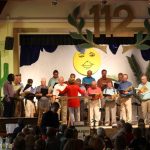
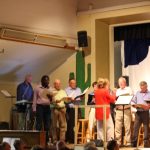
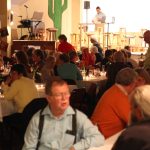
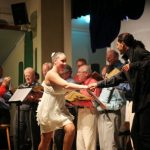
Im Februar nahmen einige Sangesbrüder privat an der jaehrlich stattfindenden Marinedenkmalfeier teil.
Wir probten in Vorbereitung auf das Treffen in Omaruru im März zusammen mit dem WHK. Männerchor. Es fand ein Übungstag im Wronsky Haus Saal mit anschliessender Abendvorstellung statt. Hier sei Peter (Brüggemann) und Ulli (Harms) gedankt für den Plakatentwurf.
Am Sonntagmorgen wohnten wir dem örtlichen Gottesdienst bei und lauschten der Predigt von Linette bevor jeweils die Rückfahrt nach Hause angetreten wurde.
Der Besuch in Omaruru ist gut abgelaufen. Es wurde aber von mehrern Sangesbrüdern Unzufriedenheit zum Ausdruck gebracht, betreffs der Kosten die an Ihnen hängen geblieben sind. Für die Zukunft muessen diese Fragen vorher genau geklärt werden.
Im März lud uns Sangesbruder Jochen Schwietering zum Frühstück nach ‘Schalom’ anlässlich seines 60. Geburtstages ein. Nochmals vielen Dank.
Zu einer weiteren Feier war der Anlass die 40 jährige Mietgliedschaft im Chor von Sangesbruder Herbert Schier. Er lud zu einem Besuch unter dem Motto ‘Bayrische Brotzeit’ auf seinem Balkon zu Hause ein und bewirtete uns köstlich. Auch Dir Herbert nochmals vielen Dank.
Zum Vatertag am 29. Mai 2014 war bei Sofia Dale zum Frühschoppen ein Mittagsessen geregelt worden. Bei einem Besuch von Ulli zur 11 Uhr Sendung von Frau Brell beim Deutschen Dienst des NBC hat er heftig die Werbetrommel gerührt. Es sind aber leider keine Leute aufgtaucht. Das Kommittee plant in kommenden Jahr den Vatertag eventuell in den S.F.C. zu verlegen zwecks möglicher Mitgliederwerbung.
Am 22. Mai erhielten wir einen Brief als Kündigung vom ‘Swakop Club’ betreffs unserer Aktivitäten als SMGV. Es hat demzufolge viele Sitzungen unseres Kommittees und mit dem’Club’ Kommittee gegeben. Wir haben am Ende eine vorläufige Lösung gefunden. Unsere Mitgliedschaft ist für die Zukunft auf einer Jahresbasis (1. September bis 30.August des nächsten Jahres) festgelegt mit Kündigungsfrist von 3 Monaten beiderseits. Ich möchte in diesem Zusammenhang darauf hinweisen, dass die Sangesbrüder in der Zukunft unter keinen Umständen vereinsinterne Angelegenheiten und Meinungsverschiedenheiten nach aussen tragen. Insbesondere sind das KEINE KNEIPENGESPRÄCHE. Das Problem ist letztendlich aus diesem Grund enstanden. Ausserdem ist ein weiterer Grund dass dem Verein Schaden zugefügt wird. Wir sind allzeit am Werben um neue Mitglieder und schiessen uns mit solchem Verhalten letztlich selbst ins Knie. Sollte ein Sangesbruder in irgendeiner Form ein Problem mit dem Verein oder einer Person haben, bitte ich im Namen des SMGV, sich einzig und allein an das Vereinskommittee zu wenden die Probleme zu besprechen und Lösungen zu finden. Es sollte unter keinen Umständen ausserhalb des Vereines schlechtes ueber den SMGV geäussert werden
Sangesbruder Herbert ist während seines Deutschlanbesuches am 3. Juli in Berlin zu Gast gewesen bei der Berliner Liedertafel. Im August erhielten wir eine e-mail der B/ Liedertafel worin eine private Gruppenreise, überwiegend bestehend aus Liedertäflern eine Namibia Reise angekündigt wird. Sie werden während ihrer Reisezeit, vom 15.03 bis 26.03 2015, zwei Tage in Swakopmund sein und im Hansa Hotel logieren. Es ist von ihnen angefragt mit uns einen Abend zu verbringen. Das Datum wird noch bekannt gemacht .
Zu dem jährlich stattfindenden Musikalischen Abend ‘Swakop musiziert im September trugen wir mit zwei Liedern bei und hörten positive Kommentare. Danke an unsere Dirigentin für die gute Leitung.
Es wurde dann an den folgenden Singabenden fleissig weitergeprobt an den Liedern für das Stiftungsfest am 18. Oktober 2014 welches unter dem Motto ‘Evergreens aus 112 Jahren stattfand.. Das Program ist beim Publikum gut angekommen und man hört in der Stadt positive Kritk. Wir sind scheinbar auf der richtigen Linie leichtere und lockere Sachen darzubieten. Das Essen bedarf einiger Kritik welche dem Hersteller rückgemeldet wurde.Sangesbruder Peter (Brüggemann) fertigte zu dem Fest wieder ein ansprechend schönes Plakat an. In seiner Abwesendheit trotzdem vielen Dank für die Mühe.
Wo ich schon am DANKE SAGEN bin möchte ich auch Frau Edith Klimas herzlich danken für ihren liebevollen Einsatz und Ideen für die Tischdekoration zu allen unseren Festen der letzten Jahre.
Ich möchte ausserdem Allen Anderen danken für die Vorbereitung und Arbeiten im H.d.J. zu unserem Stiftungsfest. Gleichzeitig bitte ich aber auch darum, dass in Zukunft bessere Zusammenarbeit aus dem Verein erbracht wird; es kann nicht angehen, dass immer dieselben Leute die Arbeiten erledigen . und enige den Schongang einlegen.
Am 15. und 16. November 2014 unternahmen einige Sangesbrüder eine Wochenbendtour nach UIS.Auf dem Rückweg wurden dann eine Menge alter Reifen, Gummifetzen und Flaschen entlang der Strasse aufgeladen und in Swakopmund auf dem Müllplatz entsorgt. Es liegen aber noch eine Menge weitere Reifen und anderer Dreck and de Strasse. Somit sollten wir diese Tour im nächsten Jahr in Form eines Wochenendausfluges widerholen.
Unsere Webseite wird seit neuem wieder auf Datum gehalten duch Peter.
Die ‘Seeschwalbe’ wird bearbeitet durch Sangesbruder Franz mit Hilfe von Ulli und Peter.
Es geht an dieser Stelle wieder ein Apell an Alle für Unterstützung mit Informationen usw.
In der Planung für das kommende Jahr wird es zunächst einmal ein bisschen langsamer gehen da unsere liebe Dirigentin Dörte sich eine Auszeit erbeten hat . Sie möchte ein bisschen langsamer treten für einige Zeit. Wir wünschen Ihr eine gute Erholung.
Ich möchte zum Ende meines Jahresberichtes möchte ich mich herzlich Bedanken bei den Kommittemitgliedern für die Zusammenarbeit im vergangen Jahr und wünsche dem neuen Vorstand alles Gute für das Jahr 2015.
☼ ♫ ♫ ♫ ♫ ♫
HOLGER AHRENS
2015
JAHRESBERICHT des SMGV 02 vom 1.Vorsitzenden für das Jahr 2015
Liebes Ehrenmitglied und Dirigentin, Dörte, liebe Linette, liebe Sangesbrüder, liebe Gäste!
Herzlich willkommen zur Jahreshauptversammlung im 113. Jahr unseres Bestehens.
Ich freue mich über alle die hier sind. Ihr bezeugt mit eurer Anwesenheit, wie wichtig euch das Wohl unseres Vereins ist.
Das Jahr 2015, das einige Herausforderungen mit sich brachte, ist wirklich schnell verflogen. Seitdem sind der neue Vorstand, bestehend aus Franz Klimas, Karl-Ernst Otto, Andy Bauer, Herbert Schier, Wüdo van Wijk, – und Peter Brüggeman und Rüdiger Moisel für die ausscheidenden Holger Ahrens und Ulli Harms, mit Elan an die neuen Aufgaben gegangen.
Ein Schwerpunkt dieser Aufgaben war, besonders die sozialen Aktivitäten zu beleben, und wir hatten uns vorgenommen, dass der Verein sich monatlich mindestens einmal ausserhalb der Proben/Auftritte trifft.
So konnten wir, noch vor Jahresende 2014, den 80. Geburtstag unseres ehemaligen Sangesbruders, Werner Scholze, – sehr zu seinem Ergötzen und seiner Freude – im Tree House in Usakos in sehr geselliger Runde feiern.
Das Jahresanfangsbraai an der Swakopmündung – mit Weib, Franz-Holz und Rüdigers Hundemeute – ist nun schon fast eine feste Institution.
Zwei Schafe am Spiess für den Swakopmund Club im Rahmen eines Frühschoppens – im Februar vortrefflichst von Wüdo organsiert – sorgte für ein gutes Klima mit allen anderen Clubmitgliedern im anstehenden Jahr.
Im März durften wir Mitglieder der Berliner Liedertafel bei gelungenem Potjie im Club begrüssen. Ein Treffen, das alte Erinnerungen wach werden liess.
Auch der SMGV-Eintopf beim Preiskegeln hat unser Standing unter den Clubmitgliedern und dem Clubvorstand deutlich verbessert.
Die Walpurgisnacht auf Nordenburg wurde mit einem Riesenfeuer und dem Walpurgispotjie zünftig zelebriert.

Walpurgis 2015 auf Nordenburg
Im Juni versuchten wir uns beim Karnevalsumzug als echte Mafiosi. Irgendwie muss das sehr echt ausgesehen haben und gut gelungen sein, denn unser Wagen erhielt den ersten Preis.

Das Kaffeetrinken am Swakop Rivier im Juli, bei notorischem Südwester am grossen Baum, wurde von etlichen Sängern und den jeweiligen Partnerinnen frequentiert.
Ein vereinsinterner Kegelwettbewerb fand nach dem Uebungswochenede im September statt. Wilfried Henseler – als Oberclubkegler – hat uns die Feinheiten der exzentrischen Kugeln näher gebracht. Wir haben Robin Otto und Gisela Moisel als die Kegeltotalitäten gekrönt.
Unsere musikalischen Stationen in diesem Jahr, waren hingegen eher kleinerer Art, trotzdem aber nicht weniger gut dargeboten. So sangen wir im Januar zur Hochzeit von Arvids Nichte. Eddi Klimas 70. wurde Anfang April bejubelt. Wir haben uns bei Fritz Wagners diamantenem Hochzeitsjubiläum im April mit einigen gut dargebotenen Liedern im Hotel zum Kaiser präsentiert. Unsere Auftritte mit anderen Chören und Musikgruppen zum Singwochenabschluss im August und zum Weihnachtssingen im November, wurden von Publikum immer sehr positiv bewertet. Auch bei weniger fröhlichen Auftritten, Reini Matheis Trauerfeier im August und Andy Bauers Gedenkstunde im Oktober, konnten wir mit unseren Liedern – dem Rahmen entsprechend – gute Akzente setzen.
Dieses Jahr haben wir versucht, mit intensiveren Probezeiten – sprich Uebungswochenenden – schneller mit dem Einstudieren unseres Liedguts voranzukommen. Sicher hat das schon Einiges bewirkt. Aber, wenn wir weiterhin unserem Publikum unsere Lieder mit Ueberzeugung und Fröhlichkeit darbieten wollen, wäre es der Sache sehr dienlich, wenn der Einzelne auch zu Hause ihre Texte und vielleicht auch die Musik weiter einstudieren würden.
Leider ist es uns – aus diversen organisatorischen Gründen, die nicht immer in unserer Hand lagen – nicht gelungen, das Stiftungsfest noch in diesem Jahr abzuhalten. Ich hoffe, dass es dafür ein umso grösserer Erfolg wird, wenn es nun im Januar über die Bühne geht.
Sehr wichtig für den musikalischen Fortbestand des Vereins ist auch, dass Franz Klimas Kopien aller Noten des Vereins an einen sicheren Ort ausgelagert hat, falls irgendwann mal das Notengut, das bei Klimas Glas gelagert ist, zu Schaden kommen sollte.
Auch unsere SEESCHWALBE durfte dank Franz Klimas dieses Jahr wieder ausfliegen. Erfreulich ist, dass mehr Sänger sich mit ein paar kleinen Artikeln daran beteiligt haben.
Erwähnenswert ist weiterhin, dass fast alle Sänger nun das neue Sängerhemd erstanden haben, und fast keiner den versprochenen Zuschuss des Vereins zum Ankauf in Anspruch genommen hat. In schwarzer Hose und dem neuen hellblauen Hemd hat sich der Verein im Aussehen deutlich erneuert. Es bleibt zu hoffen, dass auch der letzte Sänger sich nun so ausstattet ! Dazu kommen noch die neuen Namensschilder, die, der Mitgliedsschaftsdauer jedes Sangesbruders entsprechend farblich angepasst, den Anblick auflockern.
Unser Verein zählt heute 24 Sänger, die mehr – oder manchmal auch sehr viel weniger – bei den Proben und anderen Aktivitäten dabei waren.
1.Tenor: Holger Ahrens, Ulf Göthje, Edmund Klimas, Harald Knobloch, Joel Nambuli, Marcel Noble, Bernd Schlag, Wüdo van Wijk.
2.Tenor: Heinz Czech, Uli Harms, Karl-Ernst Otto, Herbert Schier, Hans Thomass,
1.Bass: Raini Becker, Andreas Keding, Ricky Krüger, Arvid Grosche, Jochen Schwietering.
2.Bass: Peter Brüggemann, Alex Haupt, Franz Klimas, Erwin Körner, Rüdiger Moisel, Christian Stiebahl.
Wir haben zur Zeit auch die folgenden fördernden Mitglieder:
Kurt Bellwinkel, Achim Bingel, Gerd Brüggemann, Herrmann Deetlefs, Heiner Diekmann, Thomas Ehbrecht, Dieter Göthje, Silke Hornung, Edith Klimas, Gerd Link, Herbert Lohmeier, Hans Lorenz, Luise Schmid, Herbert Schulze, Lothar Wiedmann, Konrad Woermann
Wenn man sich die jährliche Bestandaufnahme der aktiven Sangesbrüder ansieht, gedenkt man unwillkürlich derer, die nicht mehr dabei sind. In den vergangenen Monaten haben wir uns von unserem ehemaligen Sänger und Swakopmunder Arzt, Reini Matheis, verabschiedet. Ganz besonders betroffen waren wir vom plötzlichen und total unerwartetem Verlust unseres sehr treuen Sangesbruders und unserer Musikmaschine, Andy Bauer. Wir gedenken euch in Stille, indem wir uns nun kurz erheben.
Ich danke euch !
Dank möchte ich abschliessend auch all denen aussprechen, die sich fortlaufend für unseren Verein einsetzen… den stillen Helfern im Hintergrund…. die gar nicht mal zum Verein gehören…… allen Mitgliedern… darunter besonders dem HARTEN KERN…. – bei den Proben, bei den Auftritten und anderen Veranstaltungen – den Vorständlern – bei den Meetings und all den organisatorischen Aufgaben, die nun mal meistens an einigen Wenigen hängenbleiben und trotzdem immer nach besten Möglichkeiten erledigt werden, und natürlich – ganz besonders – unserem musikalischen Duo : Dörte und Linette
Rüdiger Moisel
1.Vorsitzender
2016
JAHRESBERICHT des SMGV 02 vom 1.Vorsitzenden für das Jahr 2016
Liebe Sangesbrüder
Herzlich willkommen zur diesjährigen Jahreshauptversammlung.
Der aktuelle Vorstand, bestehend aus Karl-Ernst Otto, Herbert Schier, Ricky Kruger, Wüdo van Wijk, Ulli Harms, Peter Brüggeman und Rüdiger Moisel sah sich mit etlichen Herausforderungen konfrontiert. Zwei Mitglieder des Vorstandes (Ricky – arbeitsbedingt, Ulli – krankheitsbedingt) schieden im Laufe des Jahres aus, was dem Vorstand sicher Einiges erschwerte. Zum Glück sprang Franz Klimas wieder als Kassenwart ein um Ulli Harms bis zum Jahresende zu ersetzen. VIELEN DANK FRANZ! WIR SCHäTZEN DAS ALLE SEHR.
Leider musste das aus dem Oktober 2015 verschobene Stiftungsfest, betitelt “Wer soll das bezahlen ?”, aus dem Programm gestrichen werden. Gründe dafür waren vielfältig: Unsere Dirigentin war mit dem erreichten Niveau nicht zufrieden. Vielen Sängern lagen manche der geplanten Stücke nicht. Die Probenbesuche einiger Sangesbrüder waren unzureichend, so dass Eingeübtes immer wieder von vorn erarbeitet werden musste. Es bestand eine Unwilligkeit, die einstimmigen Lieder auswendig zu singen. Aber auch das Fehlen des kurz zuvor verstorbenen Sangesbruder Andy Bauer wirkte sich sehr negativ auf die geplante Gestaltung des Auftritts aus. So mussten wir einsehen, dass ein abendfüllendes Programm nicht möglich war. Im Hinblick auf das neu einzuprobende Programm für die Kaptour, nach Beratung im Vorstand und nach Rücksprache mit Dörte Witte, mussten wir das Stiftungsfest absagen. Dies ist natürlich ein echter Tiefpunkt für unseren Verein und ich denke, JEDER Sänger ist gefordert dazu beizutragen, Aehnliches in Zukunft zu vermeiden.
Eine weitere unangenehme Geschichte am Anfang des Jahres, war die Tendenz vieler Sänger während der Proben negativ aufzufallen. Die Situation erreichte einen Tiefpunkt, der dazu Anlass gab, dass Dörte dieses ansprechen musste und die weitere Probeaktivität des Vereins auf dem Spiel stand. Erfreulicherweise hat sich dann der Verein eines Besseren besonnen. Es wurde ein Verhaltenskodex aufgestellt, der im Proberaum aushängt. Ich hoffe, dass ALLE Sänger sich AUCH WEITERHIN daran halten und ihn ab und zu einmal wieder durchlesen, dass er nicht in Vergessenheit gerät.
Auch mussten wir uns in diesem Jahr von drei, dem Verein verbundenen Menschen, verabschieden. Herbert Lohmeier und Hans Rohlwink waren beides ehemalige Sänger, wobei Hans selbst 2 Jahre lang den Vorsitz des Vereins innehatte. Mit ihnen hat auch Gerlinde, Ehepartnerin unseres fördernden Mitglieds, Gerd Link, unsere Kreise für immer verlassen. Ihnen sei nun ein kurzer, stiller Gedanke gewidmet.
Der Höhepunkt des vergangenen Jahres war zweifellos unsere Tour in die Weinfelder am Kap der Guten Hoffnung. Es war eine kurze kernige Tour mit 12 Sängern und unserer Dirigentin Dörte Witte und dazu am Klavier Linette Potgieter. 8 Tage haben wir das Kap unsicher gemacht und uns bei 4 Auftritten profiliert. Einzelheiten sind noch immer über unsere Webseite, oder durch die von Peter Brüggemann erstellte DVD, nachzuvollziehen. Ich glaube, jeder, der mit dabei war, hat dieses Erlebnis voll ausgekostet. Wir sind uns auf dieser Reise untereinander wieder ein ganzes Stück nähergekommen. Besonders neue Sänger, wie z.B. Alex und Marcell haben hautnah erfahren, was es heisst, SANGESBRUDER zu sein! Dieses Erlebnis wird lange in unserem Vereinsdasein einen Nachhall haben!!!! Ich hoffe, dass die gemeinsamen Erfahrungen in Zukunft Anlass sein werden, neue Herausforderungen im Verein mit frischem Elan anzupacken.
Weitere Aktivitäten des vergangen Jahres (seit der letzten JHV) sind aus der nachfolgenden lockeren Aufzählung ersichtlich:
Noch vor der Jahreswende hielten wir in der Antoniusresidenz ein Adventssingen ab. Es waren fast alle Sänger mit von Partie, was sicher auch mit der darauffolgenden Photositzung auf Erwin Körners Old Timer am Leuchtturm zu tun hatte.
Der Jahresabschluss im Europa Hof war richtig gemütlich und bei dieser Gelegenheit wurde Eddi Klimas Wahl als Sangesbruder des Jahres angekündigt.
Die inzwischen alljährlichen Ereignisse wie das Eröffnungsbraai an der Swakopmündung, die Walpurgisnacht auf Nordenburg und der Vatertag am Strand bei der Mole (um nicht zu sagen auf den Füssen der Sicherheitsbeauftragten des Strandhotels) waren gesellige Gelegenheiten, die mehr oder weniger gut besucht wurden.
Die kalten Wintermonate Juli und August wurden durch Christian Stiebahls Chilli Concane zu Franz Klimas 75. und einen Trip der harten Truppe an den Omaruru deutlich angewärmt.
In diesem Jahr hatten wir – wie auch in der Vergangenheit – wieder Besucher aus Uebersee zu Gast. Im Oktober war der Gesangverein Mundelfingen aus dem Südschwarzwald bei einer Probe im Swakopmund Club dabei, mit dem dann anschliessend lustig weitergefeiert- und gesungen wurde. Abgeschlossen wurden unsere gesanglichen Aktivitäten in diesem Jahr durch den gemeinsamen Auftritt im Haus der Jugend mit dem Schifferklavierorchester DIE FRöHLICHEN EICHSFELDER. Die Zuhörer kommentierten den Abend sehr positiv. Die anschliessende Wüstentour mit abendlichem Braai klappte wie immer gut. Leider waren in diesem Fall die finanziellen Früchte im Verhältnis zum Aufwand recht gering. Damit wird sich wohl der nächste Vorstand befassen müssen, um Gleiches zukünftig zu vermeiden.
Das eher informelle Stiftungs-/Geburtstagsfest des Vereins am 27.10. in seiner neuen Fassung darf gerne als Erfolg in die Annalen eingehen. Das einfache Essen und der kräftige Gesang zum Playback der eigenen Lieder bildeten den schönen Rahmen einer einfachen Feier.
Leider hat uns unsere Dirigentin, Dörte Witte, nach jahrelanger, treuer und kompetenter Leitung, aus verschiedenen persönlichen Gründen gekündigt. Das Gleiche gilt nun auch für Linette Potgieter, ihre und unsere treue Begleiterin (am Klavier!!), so dass in unserem Uebungsablauf ein deutlicher Bruch entstanden ist. Linette und Dörte wurden im Oktober in internem Rahmen gebührend verabschiedet. Beide gaben allerdings die Zusage, dass sie dem Verein weiter verbunden sind und zur Verfügung stehen, sollte Not am Mann/der Frau sein.
Wir hatten das Glück, Ende Oktober, in Maria Walles-Davel einen Ersatz zu finden. Zur Zeit sind wir noch dabei, uns aneinander zu orientieren. Wir hoffen, dass wir mit ihr in Zukunft ein gutes Miteinander haben werden.
Unser Verein zählt heute 21 Sänger, die leider nicht immer alle bei den Proben und Vereinsaktionen dabei sein konnten.
1.Tenor: Ulf Göthje, Edmund Klimas, Harald Knobloch, Joel Nambuli, Marcell Noble, Bernd Schlag, Wüdo van Wijk.
2.Tenor: Holger Ahrens, Karl-Ernst Otto, Herbert Schier, Hans Thomass,
1.Bass: Raini Becker, Uli Harms, Andreas Keding, Arvid Grosche, Jochen Schwietering, Marinus Steyn.
2.Bass: Peter Brüggemann, Alex Haupt, Franz Klimas, Rüdiger Moisel,
Abschliessend meinen Dank all denen die sich im vergangenen Jahr für das Wohl des Vereins eingesetzt haben – viel und etwas weniger viel, aus nah und fern, gross und klein, begeistert und manchmal nur mit langen Zähnen, euch allen …. gilt meinen Dank als erster Vertreter dieses Vereins.
Dankeschön !
Rüdiger Moisel
Vorsitzender
2017
JAHRESBERICHT des SMGV 02 von den 1.Vorsitzenden für das Jahr 2017
Liebe Sangesbrüder !
Herzlich willkommen zur diesjährigen Jahreshauptversammlung.
Wir blicken auf ein zwiespältiges Jahr zurück.
Der neue/alte Vorstand hat sich schnell an die Arbeit gemacht und die Aemter waren schon am 28.11. verteilt. Ausser, dass Franz Klimas den ausscheidenden Kassenwart Ulli Harms ersetzte, und Marinus Steyn Beisitzer wurde, blieb alles beim alten.
Wir sind frohen Muts mit der neuen Dirigentin – Maria Wallis – ins neue Jahr gestartet und schon der erste Auftritt anlässlich des Besuchs der Sandsturm Kairo Truppe bei den klingenden Steinen am Swakoprivier war ein Erfolg. Das hatte auch zur Folge, dass wir – als Verein – “nochmals” zu Mitgliedern der Vereinigung SANDSTURM KAIRO ernannt wurden.
Der Jahresabschluss fand diesmal im alten Marmorbruch im Rahmen eines Braaivleis statt und war nur mässig besucht. Dem folgte bald der neue Jahresanfang an der Swakopmündung. Danach trafen wir uns im Deutschen Haus auf Hans Thomas grosszügige Einladung zu seinem 85 Geburtstag und bei schönstem Gesang wurde dies eine fröhliche Feier.
Inzwischen wurde intensiv auf das Weinfest am 4.3.2017 (das erste Fest als Ersatz des jährlichen Stiftungsfestes im März) hingearbeitet. Mit Hilfe von unserer neuen Dirigentin, Maria Davel, Dörte Witte und Linette Potgieter wurde dann ein ansehnliches Programm angeboten, dass im Publikum guten Anklang fand. Auch der finanzielle Erfolg des Festes liess wenig zu wünschen übrig – zumal es wahrscheinlich eins der wirtschaftlich ergiebigsten Unternehmungen war, die der Verein je veranstaltet hat.
Weiterhin beteiligten wir uns an der 75.Jubiläumsfeier des Swakopmund Club. Unsere musikalischen Einlagen fanden bei den Anwesenden gute Resonanz.
Leider kam unsere neue Dirigentin nach dem Weinfest nicht mehr regelmässig zu den Probeabenden. Auch hatte man das Gefühl, dass sie nicht mehr ausreichend Zeit hatte, sich vorzubereiten, wenn sie dann bei einer Probe war. Deswegen wurde im April entschieden, das Uebereinkommen mit ihr zu beenden.
Als Vorsitzender der ersten Jahreshälfte musste ich dann während einer Vorstandssitzung (13.4.2017) feststellen, dass ich den Herausforderungen dieses Postens nicht mehr gewachsen war. Deshalb habe ich mich dann mit sofortiger Wirkung entschieden, meinen Posten zur Verfügung zu stellen.
Rüdiger Moisel / Vorsitzender (bis April 2017)
2019
Auszug aus dem Jahresbericht des Vorsitzenden R.Moisel:
2019 begann mit einem gewisasen Einschnitt. Unser langjähriger und verdienter Kassenwart, Franz Klimas, stellte sich nicht mehr zur Wiederwahl in den Vorstand und schied so auf eigenen Wunsch aus dem Leitungsgremium des Vereins aus. An seiner Stelle wurde Rüdiger Moisel in den Vorstand aufgenommen. Der Vorstand hatte sich auf Grund der rückläufigen Mitgliedszahl des Vereins auf fünf Mitglieder reduziert: Nach interner Ämterverteilung übernahm Rüdiger Moisel den Vorsitz, vertreten von Herbert Schier. Holger Ahrens wurde neuer Kassenwart und Karl Ernst Otto führte weiterhin die Feder, während Alex Haupt sich als Beisitzer erbot, das Amt des Notenwarts zu übernehmen.
Der Höhepunkt des vergangenen Jahres war sicher unser Jahresfest unter dem Motto “Auf Kaperfahrt mit dem Swakopmunder Männergesangverein”. Mit Lindi Bothas Leitung und Gert Meiers Begleitung konnten wir den Zuhörern einen sehr unterhaltsamen Abend bieten. Der Beifall und die Kommentare aus dem Publikum waren durchwegs sehr positiv. Besonders die gute Mischung aus anspruchsvolleren (durchkomponierten) Stücken, den Sologesängen mit voller Chorpower in den Kehrreimen, sowie den sing-along Möglichkeiten für unsere Gäste scheinen ein Erfolgsrezept zu sein. Dazu kam noch eine gut ausgetüftelte Moderation, die dem Ablauf des Abends einen roten Faden und jedem Vortrag einen sinnvollen Platz in der Show gab. Leider war dieser Abend auch der offizielle Abschied unserer musikalischen Leitung, Lindi Botha, die aus beruflichen und familiären Gründen nicht mehr länger für uns zur Verfügung stand. Aber wir konnten ihr einen gebührenden Abschied bereiten und als Dank – durch großzügige Spenden verschiedener Sänger und auch des Vereins – eine gewichtige Aufbesserung für ihre Reisekasse auf den Jakobsweg in Europa mitgeben.
Am 15.12. wirkten wir bei der Trauerfeier in der katholischen Kirche für unseren lieben und treuen Sangesbruder, Heinz Czech mit. Sowie den Sangesbrüdern Holler Schirmer und Erwin Körner, die im vergangen Jahr verstarben.
Unsere Jahresabschlussfeier 2018 im Deutschen Haus wurde wieder von Franz und Doris Klimas aufs beste vorbereitet und organisiert. Passend zur Gelegenheit, wurde Franz als Sangesbruder des Jahres 2019 ausgezeichnet.
Das alljährliches Braai zum Jahresanfang am Meer südlich der Swakop-Mündung bildete den Auftakt für neue Aufgaben. Im April wagten wir mit unseren Piratenliedern eine Auftritt in der Kneipe OLD SAILOR von Andy Thompson.
Zur Walpurgisnacht hatten sich wieder etliche Sangesbrüder auf Nordenburg eingefunden. Dort konnten sie die Stille der Namib, das leckere Potjie, die funkelnden Sterne und das grosse Walpurgisfeuer geniessen. Der Juli stand dann unter – nun fast schon jährliches – Treffen und Konzert mit dem Windhoeker Männerchor in Omaruru. Unter Leitung von Erina Junius konnten wir dem – leider sehr kleinem – Publikum eine breite Mischung an Chormusik bieten.
Eine Woche später beteiligten wir uns mit unseren Seemannsliedern an dem Musikalischen Blumenstrauss der Kantorei im Haus der Jugend. Bei dieser Gelegenheit erspähten wir einen unserer ehemaligen Dirigenten, Nils Erlank, im Publikum. Er weilte in Swakopmund auf Urlaub und konnte uns dann tatsächlich für einige Proben am Donnerstag an die Kandare nehmen. Was für ein Vergnügen, wieder einmal von einem professionellen Dirigenten geleitet zu werden.
Des weiteren ließen wir es uns nicht nehmen, im Laufe des Jahres ein paar Ständchen anlässlich der runden Geburtstage von Käthe Grosche (100 Jahre) und Irmela Erlank (90 Jahre), unserem kranken Sangesbruder Herbert Schulze, dem Hochzeitsjubilar Siegfried Mater, sowie dem 50-jährigem Klassenjubiläum von Herbert Schiers Jahrgang der hiesigen Oberschule, zu bringen.
Dieses letztere Ständchen nahm unser Sangesbruder Herbert Schier zum Anlass, jedem Vereinsmitglied grosszügigerweise ein – für das anstehende Kaperfahrtfest signiertes – Polohemd zu sponsern. Bei dieser Gelegenheit trafen wir übrigens auch einen weiteren ehemaligen Dirigenten, Evert Genis, unter großem Hallo. Er ließ es sich nehmen, einige unserer Songs aus voller Brust mitzusingen.
Auf sozialer Ebene hat mich Folgendes im Verein in den vergangenen 12 Monaten besonders beeindruckt. Die rege, entspannte und doch konzentrierte Teilnahme an den Proben, obwohl wir meistens ohne professionelle Leitung und Begleitung auskommen mussten. Dabei verliefen die Abende fast immer sehr harmonisch und mit Gert Meyer und Herbert Schiers Hilfe wurde ein erstaunlich umfangreiches Pensum geschafft.
Die von Franz Klimas initiiere Müllsammelaktion im Swakoprivier mit guter Unterstützung aus den Sängerreihen. Das ist für mich ein ausgezeichnetes Zeugnis guten Umweltbewusstseins und auch einer klaren sozialen Verantwortung des Swakopmunder Männergesangvereins.
Ich wünsche mir, dass sich in Zukunft noch mehr der Mitglieder daran beteiligen können.
Das Gründungsfest des Vereins auf Nordenburg kann sicher als der soziale Höhepunkt für das Jahr gelten. Die Harmonie, der Spass, die guten Gespräche, die leeren Biertins, das ausgeputzte Potjie und die allgemeine Ausgelassenheit waren Beweis genug für mich, dass wir hier eine gute Art gefunden haben, unsere Gründung jährlich unter- und miteinander zu feiern. Darauf müssen wir aufbauen.
Der Vorstand hat sich in den vergangenen Monaten 12 mal getroffen. Es wurde Vieles geplant, überlegt und besprochen. Trotzdem wurden alle Punkte zügig erledigt, und so dauerten die Sitzungen selten länger als eine Stunde. Dafür danke ich meinen “Mitsitzern” ganz besonders. Unter diesen Beschlüssen waren die Folgenden von grösserer finanzieller Bedeutung : Einmal haben wir die im Metrofeuer verbrannten Podeste zur Bühnenvergrösserung im Haus der Jugend ersetzt. Des weiteren haben wir nun den Auftrag vergeben, unsere CD wieder neu auflegen zu lassen. Dies schliesst ein “Remastering” der alten CD, die Erstellung eines neuen Begleitbüchleins und den Druck von 500 neuen CDs ein.
Im Verein freuen wir uns über 3 neue und ein altes Mitglied in Dawie Coetzer, Gert Meyer, Helmar Runge und Wilfried Buschack, die sich im Laufe des Jahres in unsere Reihen eingegliedert haben :
Der SMGV hat nun wieder 23 Sänger, die sich wie folgt auf die einzelnen Stimmen verteilen :
1.Tenor : Ulf Göthje, Edmund Klimas, Harald Knobloch, Gert Meyer, Joel Nambuli, Marcell Noble und Bernd Schlag
2.Tenor : Holger Ahrens, Dawie Coetzer, Karl Ernst Otto, Herbert Schier und Hans Thomas
1.Bass : Raini Becker, Wilfried Buschack, Arvid Grosche, Helmar Runge, Jochen Schwietering und Wüdo van Wyk
2.Bass : Peter Brüggemann, Alex Haupt, Franz Klimas, Rüdiger Moisel und Herbert Schulze
Besonders toll finde ich, dass unsere 3 Zugvögel Wilfried, Bernd und auch Richi Worth – der inzwischen leider ja wieder den weiten Rückflug in die Heimat nach Neuseeland antreten musste – sich in unseren Reihen so wohl fühlten, und unseren Kreis im vergangenen Jahr deutlich bereichert haben. Ihnen und auch allen anderen Mitgliedern einen grossen Dank im Namen des Vereins für die rege und ungezwungene Teilnahme an den Proben, Auftritten und allen anderen Unternehmungen des SMGV.
Nicht zuletzt einen Dank an meine Sangesbrüder im Vorstand, die mich in den vergangenen 12 Monaten exemplarisch unterstützt haben !
Der SMGV 1902 verdient diesen Einsatz.
Rüdiger Moisel (Vorsitzender des SMGV 02)
20210
Jahresbericht des Vorsitzenden des SMGV 02 für 2020 vorgetragen am 26.11.2020
Liebe Sangesbrüder, liebes Ehrenmitglied Franz !
Wir stehen am Ende eines recht ungewöhnlichen Jahres. Die weltweite Coronakrise hat auch unsere Aktivitäten stark beeinflusst und beeinträchtigt.
Die musikalisch herausragende Aktion im abgelaufenen Jahr war der gemeinsame Auftritt im Saal der Namib Grundschule mit den Ochsenburgern und dem Windhoeker Männerchor am 22. Februar. Zusammen mit der drauffolgenden Wüstentour und dem Braai in der Khamischlucht mit geselligem Abschlussabend, darf dies sicher als der Höhepunkt des abgelaufenen Jahres bezeichnet werden. Dazu bemerken möchte ich auch noch, dass dies unsere einzige Veranstaltung war, die einen nennenswerten finanziellen Ertrag erbracht hat.
Ausser der allgemeinen Einschränkungen, bedingt durch die Lockdowns und der realen Gefahr einer Covid19 Ansteckung unter den Sängern, hatten wir weiterhin damit zurechtzukommen, dass uns eine kompetente musikalische Leitung und Begleitung während fast des ganzen Jahres fehlte. Trotzdem haben wir versucht, das Vereinsleben und die wöchentlichen Proben soweit möglich – weiterzuführen. Ich denke, dass uns dieses gar nicht so schlecht gelungen ist. Dafür möchte ich besonders Gert Meyer und Herbert Schier danken, für ihre Mithilfe beim Proben. Sicher wird es einige Mitglieder im Verein geben, die ein anspruchsvolleres Programm begrüsst hätten. Aber, anderen hingegen, hat das zwanglose Proben in geselliger Runde ums Feuer doch recht gut gefallen, auch wenn die Rauchzeichen manchmal ein wenig zu stark waren !
Leider mussten weitere Grossveranstaltungen aufs Eis gelegt werden. Im kleineren und geselligem Rahmen trafen wir uns trotzdem zu weiteren Anlässen : Die Beteiligung an der Feier “Swakopmund als Stadt des Jahres” im Dezember wurde erfolgreich erledigt und auch hier konnten wir finanziell von dem Auftritt profitieren. Das Jahresabschlussessen im Old Sailor war richtig gemütlich, das noch durch Gert Meyers musikalischen Einlagen eine besonderen Schwung und durch Arvids liebevoll verteilte Weihnachtspräsente eine besondere Note bekam. Das Jahresanfangsbraai fand diesmal in der Daurebecke statt, was sich bei dem herrschenden Südwester als Glücksgriff erwies. Der Vatertag in der Khamischlucht war ein willkommener Anlass mit dem der erste Lockdowns beendet wurde. Das Gleiche galt für die kleine Feier mit den verschiedensten Ehrungen im August, wo wir unter Anderem einige Geburtstage feiern, und die lange fälligen silbernen Sängernadeln Arvid Grosche, Holger Ahrens und Jochen Schwietering überreichen konnten. Auch Eddi Klimas bekam endlich seine Urkunde vom Deutschen Chorverband für 60 Jahre Sängertreue ! Die Stimmung dort in der Khamischlucht war gut – nicht zuletzt durch die gitarristischen Einlagen von Freddy Kühhirt und Ingo Berg. Unsere Geburtstagsfeier im Oktober zum 118. Bestehen des Vereins auf Nordenburg hatte – wie schon im vergangenen Jahr – die harmonische und gesellige Note, die unseren Verein auszeichnet. Das Gleiche gilt für die Papwielreifensammeltour am vergangenen Wochenende über Hotsas, Ganab, Karpfenkliff und Kuiseb Canyon. Schade, dass nicht mehr Vereinsmitglieder bei diesen sozialen Veranstaltungen dabeisein konnten. Und natürlich nicht zu vergessen …. dass wir noch die Goldene Hochzeit von Beate und Siggi Stein im Bay View Hotel beim Langstrand mit unseren Liedern musikalisch untermalen durften.
Weitere nennenswerte Entwicklungen sind die Fertigstellung der neuen Master CD unserer Namibiasongs. Sie wird uns gut zu statten kommen, wenn wir neue CDs prägen lassen müssen. Auch die neue Auflage unseres Liederheftchens ist nun beim Drucker und wir hoffen, des jeder bis zum Jahresende eine Kopie davon in den Händen halten wird. Arvid und Teresa haben sich bereit erklärt, sich um die Fördernden Mitglieder zu kümmern. Dazu braucht es noch einige Abstimmungen mit dem Vorstand, die bis jetzt leider noch nicht vollzogen wurden. Weiterhin konnte Lindie Botha wieder – erstmal nur vorläufig – als musikalische Begleiterin gewonnen werden.
Der Vorstand des Vorjahres blieb auch in diesem Jahr unverändert mit Rüdiger Moisel (Vorsitzender), Herbert Schier (stellvertretender Vorsitzender), Karl Ernst Otto (Schriftwart), Holger Ahrens (Kassenwart) und Alex Haupt (Notenwart) bestehen.
Leider verliess Karl Ernst Otto aus persönlichen Gründen den Vorstand und auch den Verein. Trotz Versuchs, liess er sich nicht überzeugen, wieder in die Reihen des Vereins zurückzukehren. Die Arbeit des Schriftwarts wurde vorrübergehend vom Vorsitzenden übernommen, und die Hoffnung besteht, dass dieser Posten im neuen Jahr anderweitig besetzt wird.
Im Verein freuen wir uns über 4 neue Mitglieder in Jörg Stammwitz, Siggi Stein, Falco Moisel und Ingo Berg. Helmar Runge und Dawie Coetzer verliessen den Verein aus gesundheitlichen Gründen. Es besteht inzwischen aber auch die Möglichkeit, dass sich in Hugo und Willie van der Merwe, sowie Josua Opperman demnächst wieder weitere Sänger zu uns gesellen werden.
Der SMGV hat nun 24 Sänger, die sich wie folgt auf die einzelnen Stimmen verteilen :
1.Tenor: Bernd Schlag, Edmund Klimas, Gert Meyer, Harald Knobloch, Joel Nambuli, Jörg Stammwitz, Marcell Noble, Siggi Stein und Ulf Göthje.
2.Tenor: Holger Ahrens, Herbert Schier, Ingo Berg und Hans Thomass
1.Bass: Raini Becker, Wilfried Buschack, Arvid Grosche, Jochen Schwietering und Wüdo van Wyk
2.Bass: Peter Brüggemann, Alex Haupt, Franz Klimas, Rüdiger Moisel, Falco Moisel und Herbert Schulze
Abschliessend möchte ich allen im Verein danken, die sich, aller Widrigkeiten zum Trotz, auf unsere Gemeinsamkeiten besonnen haben und durch ihre Anwesenheit und ihren Einsatz in den verschiedensten Sparten zum Wohl des Swakopmunder Gesangvereins beigetragen haben.
Prost, prost, Prösterchen….
Vielen Dank !
Rüdiger Moisel (Vorsitzender des SMGV 02)
2021
Jahresbericht des Vorsitzenden des SMGV 02 für 2021 vorgetragen am 25.11.2021 im Swakopmund Club
Liebe Sangesbrüder, liebes Ehrenmitglied Franz !
Wie im vergangenen Jahr mussten wir uns mit den aussergewöhnlichen Bedingungen, die uns die Coronapandemie zumutet, auseinandersetzen. So ist es verständlich, dass dadurch unsere Aktivitäten deutlich eingeschränkt wurden. Trotzdem blicken wir auf 12 Monate zurück, in denen unser singendes und soziales Wohl weitgehend erhalten blieb.
Wir konnten unsere wöchentlichen Probeaktivitäten, soweit von den coronabedingten Einschränkungen erlaubt, durch das ganze Sängerjahr fortsetzen. Dabei war es egal, ob wir uns im Freien neben der Daurebecke beim Haus Moisel oder im kleinen Saal des Swakopmund Clubs trafen. Der Besuch der Proben war trotz der Widrigkeiten fast immer gut und das ist nicht zuletzt unseren zwei Musikanten, Lindie Botha und Gert Meyer, zu danken ! Zusätzlich trugen die gemütlichen Sitzungen nach der Probe am Feuer in der Daurebecke und an der Theke im Swakopmund Club zum gesellschaftlichen Wohlfühlen im Verein bei.
Unseren ersten Auftritt hatten wir anlässlich Beethovens 250. Geburtstag am 16.12. und gleichzeitig zur Erinnerung an den ersten offizielen Auftritt des SMGV überhaupt, der 1903 an der Mole, zu deren Einweihung stattfand. Genau wie vor 117 Jahren sangen wir auch wieder das Beethovenlied “Die Himmel rühmen des Ewigen Ehre”…..Ueber Mikrofone und Lautsprecher war es ein Versuch, im Freien aufzutreten. Verschiedene Aufnahmen der dargebotenen Songs belegten, dass es noch deutlichen Verbesserungsspielraum gab. Trotzdem waren die – etwa 100 – Zuschauer dankbar, dass wir uns die Mühe gemacht hatten, diesen besonderen Versuch zu starten.
Kleinere Auftritte des Vereins fanden an Sigi Maters Krankenbett und auch später in Form einer Gedenkstunde für ihn vorne auf der alten Landungsbrücke, sowie im Esssaal des Antonius Seniorenheims statt.
Auch auf gesellschaftlicher Ebene waren wir nicht untätig : Das Jahresabschlussessen im Dezember 2020 im Deutschen Haus wurde von den meisten Sangesbrüdern, nebst einigen Partnerinnen sehr geschätzt. Das Jahresanfangsbraai am Meer wurde leider nur von einigen wenigen zelebriert. Vatertag in der Khamischlucht war dagegen recht gut besucht, dank Arvid Grosches leckeren Katfischen. Der Vereinsgeburtstag im Oktober in der Daurebecke war eine gemütliche und entspannte Affäre.
Wie schon in den Vorjahren fand wieder eine Müllsammelaktion statt – diesmal um den alten Marmorbruch – bei den Swakopmunder Kleinsiedlungen – herum. Trotz relativ spärlicher Unterstützung durch den Verein, kam immerhin eine Bakkiefracht Müll zusammen, die von Herbert Schier entsorgt wurde.
Unser grosses Projekt für 2022, die Jubiläumsreise nach Deutschland, hat viel Planungszeit verschlungen. Etliche Sangesbrüder haben dafür besonders viel Zeit investiert. Hierfür möchte ich besonders Siggi Stein, Wilfried Buschack und Herbert Schier danken. Leider sieht es nun so aus, dass dieses eine vergebliche Liebesmühe war, denn es haben sich nicht ausreichend singfähige Sangesbrüder für dieses Unternehmen gefunden.
Unsere Seeschwalbe durfte wieder einmal losflattern. Auch das überarbeitete Liederheft wurde aus der Druckerei befreit. Für beides sei Peter Brüggemann und Herbert Schier besonderer Dank für ihren Einsatz.
Ich habe im vergangenen Jahr etliche Rundbriefe verschickt. Das Erstellen und auch die Uebersetzungen nehmen viel Zeit in Anspruch. Mein dringlichster Wunsch diesbezüglich wäre, dass sich alle Sangesbrüder die Informationen, die darinnen enthalten sind, hinter die Ohren schreiben, damit man nicht jeden Einzelnen von uns nochmals persönlich an die geplanten Aktivitäten des Vereins erinnern muss. Im gleichen Atem möchte ich ALLE Vereinsmitglieder dazu auffordern, aktiver an allem Geschehen des Vereins teilzunehmen und auch Vorschläge mit Sinn und Verstand einzubringen, um unseren Aktionen zum Wohl aller eine bessere Note zu geben. Hierbei möchte ich aber eine löbliche Ausnahme nennen : Unser Ehrenmitglied, Franz Klimas, bringt sich als – Nichtvorstandsmitglied – regelmässig ein, mit Ideen und auch Mahnungen – vielen Dank dafür Franz. Als Vorsitzender schätze ich das sehr, auch wenn nicht immer alle Ideen verwirklicht werden können. Nehmt euch alle ein Beispiel daran ! Der Verein sollte immer ein Gemeinschaftsprodukt sein und nicht nur durch Einzelne am Leben gehalten werden. Ich weiss, dass man Zugpferde braucht – ABER – ein Zugochse allein, wird irgendwann auch mal müde…. Und das eher psychisch als physisch.
Der SMGV hat zur Zeit noch 20 aktive Sänger, die sich wie folgt auf die einzelnen Stimmen verteilen :
1.Tenor: Bernd Schlag, Edmund Klimas, Gert Meyer, Harald Knobloch, Joel Nambuli, , Marcell Noble, Siggi Stein und Ulf Göthje.
2.Tenor: Holger Ahrens, Herbert Schier
1.Bass: Raini Becker, Wilfried Buschack, Arvid Grosche, Jochen Schwietering und Wüdo van Wyk
2.Bass: Peter Brüggemann, Alex Haupt, Franz Klimas, Rüdiger Moisel und Herbert Schulze
Abschliessend möchte ich mich bei euch allen bedanken, dass ihr dem Verein die Stange gehalten habt, und im Grossen und im Kleinen zum Wohl des SMGV beigetragen habt.
Vielen Dank
Rüdiger Moisel
Vorsitzender / SMGV 02
2022
Jahresbericht des Vorsitzenden des SMGV 02 für 2022 vorgetragen am 1.12.2022 im Swakopmund Club
Liebe Sangesbrüder, liebes Ehrenmitglied Franz !
Ein Jahr, das wie im Flug verging liegt hinter uns. Als Vorsitzender und Aushilfsdirigent, blicke ich mit recht gemischten Gefühlen zurück. Einerseits haben wir mit dem Jahresfest und natürlich mit der Jubiläumstour viel Positives erreicht und auch damit gute Akzente setzen können. Aber ich muss eben auch sagen, dass durch viel Abwesenheit bei den Chorproben das eine Standbein des Vereins, das uns zusammenhält, leidet – das Singen. Deswegen würde ich mir für die Zukunft SEHR wünschen, dass jeder Sangesbruder versucht, um UM die Proben herumzuplanen….. dem 3-tägen Besuch der Ur-urgrossmutter, der Tochter, oder der Enkelin ist ein Stündchen Abwesenheit zur Gesangsprobe sicher zuzumuten.
Wie schon erwähnt lag in den vergangenen 12 Monaten ein Schwerpunkt bei unserem Jahresfest unter dem Motto “Wer soll das bezahlen”. Mit Genugtuung dürfen wir auf eine Veranstaltung zurückblicken, die uns und unserem Publikum Spass gemacht hat, die unseren sehr eingeschränkten Fähigkeiten Rechenschaft trug und die auch wirtschaftlich ein Erfolg war. Dank Lindie Bothas Fähigkeiten am Klavier und Gert Meyers Begleitung auf der Gitarre konnten wir unser Programm aus mehrstimmigen Liedern sowie etlicher Sologesänge flott über die Bühne bringen. Auch wurde das neue Swakopmunder Lied, “Weit im Westen”, (frei nach der Melodie von Santianos “Hoch im Norden”) erstmals dem Swakopmunder Publikum präsentiert. Das Ambiente im Innenhof des Woermannhauses liegt dem SMGV perfekt und wir werden sicher noch öfter in der Zukunft dort unsere Auftritte zelebrieren.
Der zweite Höhepunkt war unsere Jubiläumstour in den Norden des Landes. Ich denke, dass sie erfolgreich war und auch gut zu neuen Bindungen untereinander beigbetragen hat. Es war ein absolut sinnvoller Ersatz für unsere abgesagte Deutschlandtour. Aber natürlich war es auch sehr schade, dass nicht alle aktiven Sangesbrüder dabeisein konnten.
Weitere Auftritte des SMGV waren zum Matinee im Woermannhaus Innenhof, bei den Gedenkstunden für unsere aktiven und ehemaligen Sangesbrüder Hans Thomass, Horst Hofmeister und Edmund Klimas. Dazu halfen wir auch das kleine Konzert der African Vocals mit ein paar von unseren Songs auszuschmücken.
Auf sozialer Ebene hatten wir mit der sehr gut besuchten Jahresabschlussfeier in der Khamischlucht, der Walpurgisfeier auf Nordenburg, Himmelfahrt in die Daurebecke und unsere Vereinsgeburtstagsfeier am Braaiplatz vom Swakopmund Club dem geselligen Standbein des Vereins Genüge geleistet.
Leider mussten wir uns im vergangenen Jahr von etlichen aktiven und ehemaligen Sangesbrüdern für immer verabschieden. Es waren Hans Thomass, Ehrenmitglied Fritz Wagner, Edmund Klimas, Horst Hofmeister und Herbert Schulze. Ihnen zu Ehren singen wir nun die erste und dritte Strophe aus : In allen Guten Stunden.
Allerdings dürfen wir uns nun glücklich schätzen, in Cameron Coetzee, Hermann Koch und Helmut von Maltzahn drei neue stimmkräftige Sänger in unseren Reihen zu sehen. Herzlich willkommen ! Auch unserem Sangesbruder Wilfried Buschack ein herzliches willkommen zurück, nach seiner Auszeit.
Der SMGV hat zur Zeit 21 (mehr oder weniger) aktive Sänger, die sich wie folgt auf die einzelnen Stimmen verteilen :
1.Tenor: Bernd Schlag, Gert Meyer, Harald Knobloch, Joel Nambuli, Marcell Noble, Siggi Stein und Ulf Göthje.
2.Tenor: Cameron Coetzee, Holger Ahrens, Herbert Schier
1.Bass: Raini Becker, Wilfried Buschack, Arvid Grosche, Jochen Schwietering und Wüdo van Wyk, Helmut Von Maltzahn
2.Bass: Peter Brüggemann, Alex Haupt, Franz Klimas, Hermann Koch, und Rüdiger Moisel
Zum Schluss mein Dank allen im Verein für eure Beiträge im Grossen und im Kleinen.
Rüdiger Moisel
Vorsitzender / SMGV 02
2023
Jahresbericht des Vorsitzenden des SMGV 02
Im Jahr 2023 vorgetragen am 30.11.2023 im Swakopmund Club
Liebe Sangesbrüder, liebes Ehrenmitglied Franz !
Auch in diesem Jahr möchte ich mich mit meinem Resümee recht kurz fassen. Im 121. Jahr unseres Bestehens gibt es die folgenden “Highlights” zu berichten.
Wir dürfen mit unseren beiden grösseren Auftritten vor dem Swakopmunder Publikum recht zufrieden sein. Der Abend im Bierzelt bei der Antonius Residence – betitelt “Ein Tag in Leben des SMGV” und dann der gemeinsame Shantyabend am 11.11. mit den Sängern aus Geseke waren ein Erfolg. Die Resonanz bei unseren Zuhörern bestätigt dies. Einmal ist durch die Auswahl des Liedgutes mit Sologesang, Klavier- und Gitarrenbegleitung mehr Schwung und Abwechslung in unseren Vorträgen. Auch mit dem gemeinsamen – meist ein- bis zweistimmigen Singen der Kehrreime haben wir gute Effekte erzielt. Damit konnten wir das langwierigen Einproben 4-stimmiger Stücke weitgehends umgehen. Für das letztere hapert es bei uns wirklich an ausreichender Stimmenbesetzung und im Besonderen auch an regelmässiger Probeanwesenheit eines Teils unserer Sangesbrüder. Natürlich sollte der mehrstimmige Vortrag des Liedguts nicht in Vergessenheit geraten, aber heutzutage kommt bei dem Publikum, das wir besingen, der einfache, schwungvolle und deswegen effektvollere Vortrag wesentlich besser an, als ein durchkomponiertes Lied, das aber dann vielleicht an allen Ecken und Kanten etwas wackelig ist.
Auch die wirtschaftliche Seite dieser Auftritte darf sich sehen lassen, aber darüber wir uns Helmut von Maltzahn mehr berichten.
Kleinere musikalische Akzente setzten wir in diesem Jahr im Deutschen Haus bei einer von Thomas Ehbrecht vermittelten Reisegruppe, denen unser Strauss Südwesterlieder so gut gefiel, dass es in einer erklecklichen Spende für die Vereinskasse ausartete ; bei einer Veranstaltung in der NG Kerk in Ocean View – bei der wir leider verpassten, Mitglieder zu werben; bei der Gedenkstunde für Detlev Doll, dem ehemaligen Besitzer des Amtsgerichts; , beim Offenen Weihnachtssingen der Kantorei.
Sozial gab es mit dem Jahresabschluss im Deutschen Haus, Jahresanfangsbraai beim Swakopmund Club, Vatertag neben Herberts altem “Kunst und Krempel-Laden”, dem Bring-und-Braai anlässlich des Vereinsgeburtstags beim Swakopmund Club, ausreichend Gelegenheit sich in gemütlicher Runde zu treffen. Auch das Braai in der Khamischlucht war bestens organisiert und vorbereitet, was allerdings offensichtlich nicht von allen Gesekern geschätzt wurde, zu urteilen nach deren recht frühem und fluchtartigem Aufbruch des grössten Teils dieser Besucher vom Lagerfeuer.
Als besonders darf auch vermerkt werden, dass unser Ulf Göthje in diesem Jahr die Silberne Sängernadel des Deutschen Chorverbands überreicht wurde. Er ist inzwischen 27 Jahre treues Vereinsmitglied.
ABER – ICH MEINE Alles, in allem, ein recht erfolgreiches Jahr.
In eigener Sache möchte ich den Vereinsmitgliedern das Folgende ans Herz legen. Ein Verein ist nur so gut, wie seine Mitglieder einsatzfreudig, motiviert und begeisterungsfähig sind. Wenn die Mitglieder träge und unmotiviert sind, geht der Verein irgendwann ein. Deswegen möchte ich auch in diesem Jahr wieder an jeden Einzelnen appellieren, sich mit Freude, Begeisterung und auch Kreativität in das Vereinsleben einzubringen, dann ist dem SMGV eine gute Zukunft sicher.
Unser Vorstand setzte sich im vergangenen Jahr aus den folgenden Mitgliedern zusammen :
Vorsitz – Rüdiger Moisel, Stellvertreter – Herbert Schier, Kassenwart (seit 2023) Helmut von Maltzahn, Beisitzer – Holger Ahrens und Jochen Schwietering, Schriftwart – Peter Brüggemann (ko-optiert und ohne Stimmrecht im Vorstand).
Der SMGV hat zur Zeit 20 aktive Sänger, die sich wie folgt auf die einzelnen Stimmen verteilen :
1.Tenor: Ulf Göthje, Harald Knobloch, Gert Meyer, Joel Nambuli, Bernd Schlag, Siggi Stein.
2.Tenor: Holger Ahrens, Balder Camby, Herbert Schier
1.Bass: Raini Becker, Wilfried Buschack, Arvid Grosche, Jochen Schwietering und Wüdo van Wyk, Helmut Von Maltzahn
2.Bass: Peter Brüggemann, Alex Haupt, Franz Klimas, Hermann Koch, und Rüdiger Moisel
Abschliessend danke ich allen, die sich in diesem Jahr für unser Gemeinwohl eingesetzt haben.
Rüdiger Moisel
Vorsitzender / SMGV 02 / 30.11.2023
2024
Ein Jahr voller Musik, Freundschaft und besonderer Momente
Das 122. Jahr in der Geschichte des Swakopmunder Männergesangvereins von 1902 verging wie im Flug. Und wenn man auf die vielen Aktivitäten und musikalischen Höhepunkte zurückblickt, wird schnell klar: Auch 2024 war beim SMGV 02 wieder einiges los.
Neben zahlreichen kleineren Auftritten und geselligen Zusammenkünften standen vor allem drei besondere Ereignisse im Mittelpunkt unseres Vereinsjahres.
Ein Wochenende auf Nordenburg – Musik unter freiem Himmel
Im Februar führte uns ein besonderes musikalisches Wochenende auf die Farm Nordenburg. Inmitten der wunderschönen Farmkulisse nahmen wir vier für den SMGV typische Lieder unter freiem Himmel auf.
Dank des engagierten Einsatzes der teilnehmenden Sangesbrüder, der musikalischen Begleitung von Gert Meyer und Helmuth Kriess sowie der Film- und Aufnahmetechnik von Jonas Sprietersbach entstand dabei ein ganz besonderes Projekt.
Ein Teil dieser Aufnahmen ist auch auf unserer Webseite zu hören und zu sehen – und bietet einen schönen Einblick in die musikalische Seite unseres Vereins.
„Aus der Seele in die Kehle“ – unser Jahresfest
Anfang Mai stand unser großes Jahresfest auf dem Programm. Unter dem Titel „Aus der Seele in die Kehle“ erwartete die Besucher im Saal der Namib-Grundschule ein abwechslungsreiches musikalisches Programm.
Unterstützt wurden wir dabei von Joel Nambulis African Vocals und den Bellas von Lindie Botha. Gemeinsam entstand ein unterhaltsamer und abwechslungsreicher Abend, der bei unserem zahlreichen und treuen Publikum großen Anklang fand und mit viel Beifall belohnt wurde.
Für uns als Chor war es einmal mehr eine schöne Bestätigung, wie viel Freude gemeinsames Singen und Musizieren bereiten kann.
„Hast du Töne?“ – ein musikalisches Experiment
Im Oktober wagten wir ein etwas anderes musikalisches Projekt: Unter der Leitung von Henry Grossmann sollte ein mehrwöchiger Sangesworkshop unsere Stimmen und unser musikalisches Zusammenspiel weiterentwickeln.
Die Vorbereitungen dafür hatte Herbert Schier mit großem Engagement übernommen. Beim abschließenden Auftritt unter dem passenden Titel „Hast du Töne“ zeigte sich dann, dass musikalische Experimente durchaus Überraschungen bereithalten können.
Ganz im Sinne unseres Vereinsmottos darf man wohl sagen: Es war ein Abend, an dem wir gemeinsam etwas Neues ausprobierten – und dabei sicherlich auch die eine oder andere Erfahrung für zukünftige Projekte sammelten.
Viele kleine Auftritte – große Wirkung
Auch abseits unserer großen Veranstaltungen war der SMGV 02 im Jahr 2024 immer wieder musikalisch unterwegs.
So sangen wir unter anderem:
- im Dezember auf der Farm Santa beim Markt an „Gellerts Küche“,
- am Strand bei der Mole für ein Programm des deutschen Hörfunks der NBC,
- bei der Buchpräsentation „Those Were the Days“ von Coral van der Plas in der Muschel,
- beim 50-jährigen Jubiläum der Matrikklasse 1973 der Swakopmunder High School im Rossmund Golf Club,
- beim 70-jährigen Jubiläum der Kantorei im Rahmen des „Musikalischen Blumenstraußes“, des Festkonzertes und des offenen Weihnachtssingens,
- sowie bei zwei öffentlichen Proben im Old Sailor.
Auch beim Besuch der Sangestouries von Kai Müller aus dem Raum Stuttgart im Altstadt Restaurant durften wir natürlich nicht fehlen.
Und natürlich war auch der Karneval wieder eine Gelegenheit, musikalisch und mit guter Laune dabei zu sein. Eine kleine, schlagkräftige Truppe unter der tatkräftigen Organisation von Herbert Schier vertrat den SMGV 02 dort mit viel Engagement.
Unsere zahlreichen kleineren und teilweise spontan entstandenen Auftritte hatten eines gemeinsam: Sie brachten Menschen zusammen, zauberten unseren Zuhörern ein Lächeln ins Gesicht und wurden immer wieder mit viel Beifall belohnt.
Vereinsleben und Geselligkeit
Musik ist das Herz unseres Vereins – aber ebenso wichtig ist die Gemeinschaft.
So führte uns unser Jahresabschluss diesmal in die Daurebecke. Eine Fahrt zur Numasschlucht am Brandberg brachte insbesondere unseren neueren Sangesbrüdern das legendäre Daureblied näher.
Auch besondere Vereinsjubiläen boten Gelegenheit zum gemeinsamen Feiern. Herbert Schier lud anlässlich seines 50-jährigen Vereinsjubiläums im Mai und nochmals zum SMGV-Geburtstag im Oktober in seinen „Kunst-und-Krempel-Bereich“ ein. Bei gutem Braaivleis und Tafelbier blieb dabei natürlich genügend Zeit für Gespräche und Geselligkeit.
Nicht fehlen durfte außerdem unser traditioneller Vatertag in der Swakopmündung. Die leckeren Katfische aus Arvid Grosches Räuchertonne waren dabei zweifellos ein kulinarischer Höhepunkt.
Ein Verein lebt von seinen Mitgliedern
Ein Chor funktioniert nur dann gut, wenn sich viele Menschen mit ihrem Können, ihrer Zeit und ihrem Engagement einbringen. Regelmäßige Proben und Auftritte, gut vorbereitete Notenmappen, das Üben von Texten und Melodien und nicht zuletzt die Bereitschaft, sich auch außerhalb der Proben aktiv in das Vereinsleben einzubringen, gehören deshalb zu den Grundlagen unseres gemeinsamen Erfolges.
Im Jahr 2024 gab es dafür zahlreiche Beispiele.
Besonders hervorzuheben ist Alex Haupt, der in vielen langen Abendsitzungen unsere Musik mit Hilfe eines Computerprogramms aufbereitete und die einzelnen Stimmen anschließend an die Sänger verschickte.
Ebenso gilt unser Dank Peter Brüggemann, der nicht nur als Schriftwart tätig war, sondern sich darüber hinaus in vielen Stunden um die Betreuung und Aktualisierung unserer Webseite smgv02.org kümmerte.
Beide stehen stellvertretend für viele Sangesbrüder, die sich – sichtbar oder im Hintergrund – für den Verein einsetzen.
Unser Vorstand 2024
Der Vorstand des SMGV 02 bestand 2024 aus:
- Vorsitzender: Rüdiger Moisel
- Stellvertretender Vorsitzender: Herbert Schier
- Kassenwart: Helmut von Maltzahn
- Beisitzer: Balder Camby und Jochen Schwietering
- Schriftwart: Peter Brüggemann
24 aktive Sänger
Im Jahr 2024 zählte der SMGV 02 24 aktive Sänger, verteilt auf die vier Stimmen:
1. Tenor:
Ulf Göthje, Harald Knobloch, Gert Meyer, Joel Nambuli, Bernd Schlag und Siggi Stein
2. Tenor:
Holger Ahrens, Balder Camby, Mischa Fetzer, Marcell Noble und Wüdo van Wyk
1. Bass:
Raini Becker, Wilfried Buschack, Arvid Grosche, Jochen Schwietering, Herbert Schier und Helmut von Maltzahn
2. Bass:
Peter Brüggemann, Rene Getto, Alex Haupt, Franz Klimas, Hermann Koch, Martin Spitze und Rüdiger Moisel
Ein Jahr voller Jubiläen
2024 durften wir gleich mehrere langjährige Sangesbrüder für ihre besondere Vereinstreue ehren.
Harald Knobloch konnte zu seinem 60-jährigen Vereinsjubiläum gratuliert werden.
Herbert Schier erhielt die Sängernadel des Deutschen Chorverbands für beeindruckende 50 Jahre im SMGV.
Und auch Peter Brüggemann durfte sich über die silberne Sängernadel des Deutschen Chorverbands für 25 Jahre Vereinszugehörigkeit freuen.
Drei besondere Jubiläen, die eindrucksvoll zeigen, wie eng Musik, Freundschaft und Vereinstreue beim SMGV 02 miteinander verbunden sind.
Gemeinsam weiter
Wenn wir auf das Jahr 2024 zurückblicken, bleibt vor allem eines: Es war ein Jahr mit vielen Aktivitäten, musikalischen Höhepunkten, besonderen Begegnungen und zahlreichen Gelegenheiten, gemeinsam zu singen und zu feiern.
Unser Dank gilt allen Sangesbrüdern, Helfern, Unterstützern und natürlich unserem treuen Publikum, die zum Gelingen unserer Veranstaltungen und zum lebendigen Vereinsleben beigetragen haben.
Der SMGV 02 lebt von der Gemeinschaft seiner Mitglieder – und genau diese Gemeinschaft ist es, die unseren Verein seit 122 Jahren zusammenhält.
Wir freuen uns auf die kommenden musikalischen Jahre und auf viele weitere gemeinsame Erlebnisse.
SMGV 02 – Musik verbindet. Seit 1902.
2025
Musik, Freundschaft und gelebte Gemeinschaft
Das Jahr 2025 war für den Swakopmunder Männergesangverein von 1902 (SMGV 02) wieder geprägt von Musik, Geselligkeit und vielen schönen Begegnungen. Neben unseren eigenen Veranstaltungen durften wir bei zahlreichen Anlässen mit unserem Gesang zur Unterhaltung beitragen und damit einmal mehr zeigen, dass ein Männerchor auch heute noch seinen festen Platz im kulturellen und gesellschaftlichen Leben Swakopmunds hat.
Mit Musik ins neue Jahr
Unser musikalisches Jahr begann traditionell mit zusätzlichen Proben im Dezember und Januar. Diese intensive Vorbereitung hat sich bewährt und gab uns die Möglichkeit, gut vorbereitet in unsere erste große Veranstaltung des Jahres zu starten.
Nach unserer ersten öffentlichen Probe trafen wir uns zu einem kleinen Umtrunk im „Old Sailor“. Die öffentlichen Proben, die wir sowohl im Fachwerk als auch im Old Sailor veranstalteten, erwiesen sich dabei als schöne Gelegenheit, unseren Chor einem interessierten Publikum näherzubringen. Gleichzeitig konnten wir vor Publikum auftreten und wertvolle Erfahrungen für unsere späteren Auftritte sammeln.
„Wir kamen als Freunde“ – unser Jahresfest
Bereits im März fand unser musikalisches Highlight des Jahres statt: das Jahresfest unter dem Motto „Wir kamen als Freunde“.
Die Veranstaltung war ausgesprochen gut besucht und wurde vom Publikum sehr positiv aufgenommen. Besonders bereichert wurde das Programm durch die Bellas von Lindie Botha sowie eine kleine Sängergruppe aus Stuttgart unter der Leitung von Kai Möllers.
Ein besonders schöner Moment war der Auftritt für Silke Hornung, die Tochter unseres langjährigen Sangesbruders Klaus Hornung. Ihr Wunschlied „Knopf an der Bluse“ durfte natürlich nicht fehlen.
Auch wirtschaftlich konnte das Jahresfest als großer Erfolg verbucht werden. Vor allem aber bleiben uns die vielen positiven Reaktionen unserer Gäste und die gemeinsam erlebten musikalischen Stunden in Erinnerung.
Frühschoppen im Swakopmund Club
Ein weiterer Höhepunkt war unser Frühschoppen im August im Swakopmund Club. Der Innenhof wurde mit Bierbänken, Tischen, Baldachinen und einer kleinen Bühne rustikal und gemütlich hergerichtet.
Gemeinsam mit dem Windhoeker Männerchor sorgten wir mit zahlreichen Trinkliedern für gute Stimmung. Dazu gab es Kartoffelsalat, Würstchen und Leckeres aus dem Potjie. Auch Gert Meyer und Hartmut Fölscher trugen mit „Get 2“ zur musikalischen Unterhaltung bei.
Es war ein geselliger und stimmungsvoller Tag, der nach unserer Überzeugung durchaus eine Fortsetzung verdient.
Unterwegs mit unserem Gesang
Auch außerhalb unserer eigenen Veranstaltungen war der SMGV 02 im Jahr 2025 musikalisch aktiv.
Wir wirkten unter anderem mit bei:
-
dem Abschiedskonzert der African Vocals vor ihrer sechsten Deutschlandreise,
-
dem Jubiläumsfest des Georg Ludwig Kindergartens,
-
dem Sundowner-Konzert der Kantorei im Juli,
-
sowie dem Konzert der Blasmusik im Innenhof des Woermannhauses.
Bei all diesen Veranstaltungen konnten wir mit unserem Gesang zur Unterhaltung beitragen und unserem Publikum hoffentlich manche schöne Stunde bereiten.
Auch innerhalb unserer Chorgemeinschaft durfte die Musik natürlich nicht fehlen. Mit kleinen Ständchen gratulierten wir beispielsweise Lindie Botha zum 50. Geburtstag und bereiteten unserem Sangesbruder Ulf Göthje während seines Krankenaufenthalts eine musikalische Freude.
Gemeinschaft gehört dazu
Neben der Musik kommt beim SMGV 02 auch die Geselligkeit nicht zu kurz.
Ein besonderer Termin war unser traditioneller Vatertag am alten Marmorhorst. Das von unserem Ehrenmitglied Franz Klimas bestens organisierte Wettschießen sorgte ebenso für Unterhaltung wie die sportlichen Leistungen unseres Meisterschützen Wonder Awarab.
Auch unsere SMGV-Geburtstagsfeier mit Gulaschsuppe und Fassbier gehörte zu den geselligen Höhepunkten des Jahres. Bei musikalischer Begleitung durch Gert und Friedhelm wurde gemeinsam gefeiert und auf die lange Geschichte unseres Vereins angestoßen.
Unser Chor im Jahr 2025
Der SMGV 02 zählte im vergangenen Jahr insgesamt 31 Sänger. Unser Vorstand bestand aus:
-
Vorsitzender: Rüdiger Moisel
-
Stellvertretender Vorsitzender: Herbert Schier
-
Kassenwart: Helmut von Maltzahn
-
Beisitzer: Balder Camby und Wüdo van Wyk
-
Schriftwart: Peter Brüggemann
Besonders erfreulich war die Verstärkung unseres Chores durch mehrere neue beziehungsweise wieder zurückgekehrte Sangesbrüder. Friedhelm, Mike, Stefan, Volker und Wonder haben unseren Chor nicht nur menschlich, sondern auch musikalisch bereichert.
Damit konnten wir uns auch stimmlich weiterentwickeln und blicken mit Zuversicht auf die kommenden Jahre.
Gemeinsam in die Zukunft
Ein Chor lebt von seinen Sängern – aber ebenso von den Menschen, die hinter den Kulissen helfen, Veranstaltungen organisieren, Ideen einbringen und das Vereinsleben mitgestalten.
Unser besonderer Dank gilt deshalb allen Sangesbrüdern und Unterstützern, die sich im vergangenen Jahr auf ganz unterschiedliche Weise für den SMGV 02 eingesetzt haben.
Gerade dieser Zusammenhalt ist es, der den Swakopmunder Männergesangverein von 1902 seit inzwischen 123 Jahren auszeichnet. Musik verbindet Generationen, schafft Freundschaften und bringt Menschen zusammen – und genau das möchten wir auch in Zukunft weiterleben.
Ein Blick nach vorn
Unser langjähriger Vorsitzender Rüdiger Moisel kündigte zum Abschluss des Jahresberichts an, sich spätestens innerhalb der kommenden zwei Jahre aus der Vereins- und musikalischen Leitung zurückzuziehen. Sein Wunsch ist es, anschließend wieder als einfacher Sangesbruder im 2. Bass aktiv zu sein und die Gemeinschaft einmal aus einer anderen Perspektive zu genießen.
Bis dahin stehen jedoch noch viele musikalische und gesellige Stunden vor uns.
Der SMGV 02 freut sich auf die kommenden Jahre – mit Musik, Freundschaft und einer gehörigen Portion guter Laune!
Lorem ipsum dolor sit amet, consectetur adipiscing elit. Ut elit tellus, luctus nec ullamcorper mattis, pulvinar dapibus leo.